If you had a mild concussion (a head injury), watch closely for signs of problems during the first 48 hours after the injury. Follow the doctor's advice about recovering at home. Use the tips on this handout as a guide.
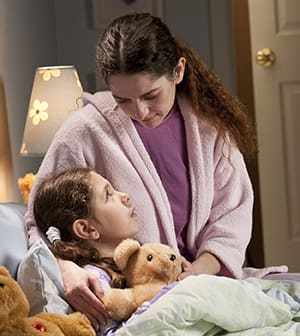
You should not be left alone after a concussion. If no adult can stay with the injured person, let the doctor know.
Have someone call
The first 48 hours after a concussion
Don't take medicine unless approved by your doctor. Try placing a cold, damp cloth on your head to help relieve a headache.
- Ask the doctor before using any medicines.
- Don't drink alcohol or take sedatives or medicines that make you sleepy.
- Don't return to sports or any activity that could cause you to hit your head until all symptoms are gone and your doctor says it's okay. A second head injury before fully recovering from the first one can lead to serious brain injury.
- If a child is without symptoms when resting, then a slow increase in activities can begin. Each step should take about 24 hours. Only move to the next step if the child remains without symptoms. If symptoms happen again, the child should return to the previous step that didn't result in symptoms. It should take about 7 days or more to go back to normal activities with this method.
- Don't do activities that need a lot of concentration or a lot of attention, including video games. This will let your brain rest and heal faster.
- Check with your doctor that it's okay to return to regular physical and mental activities.
Tips about sleeping after a concussion
Sleeping is okay and it's usually not necessary to have someone wake you up from sleep after a mild concussion. But you will want someone to help check your alertness over the next 24 to 72 hours.
If your doctor does recommend that you have someone wake you up every 2 to 3 hours, you should be able to know where you are when awakened. Follow your doctor's specific directions.
When to contact your doctor
Call the doctor if any of the following occur:
- Vomiting. Some vomiting is common, but tell the doctor about any vomiting.
- Clear or bloody drainage from the nose or ear
- Constant drowsiness or trouble waking up
- Confusion or memory loss
- Blurred vision or any vision changes
- Inability to walk or talk normally
- Increased weakness or problems with coordination
- Constant, unrelieved headache that becomes more severe
- Changes in behavior or personality
- High-pitched crying in infants
- Signs of stroke, such as paralysis of parts of the body
- Uncontrolled movements suggesting a seizure
- Loss of bowel or bladder control
Online Medical Reviewer: Anne Fetterman RN BSN
Online Medical Reviewer: Joseph Campellone MD
Online Medical Reviewer: Raymond Kent Turley BSN MSN RN
Date Last Reviewed: 09/01/2025
© 2000-2026 The StayWell Company, LLC. All rights reserved. This information is not intended as a substitute for professional medical care. Always follow your healthcare professional's instructions.
Need Help? We're Here for You
Our Member and Recipient Services Team is here to help you understand your benefits, find care, or resolve concerns.
800-510-9132
Call NC Quitline
Need support to quit smoking, vaping, or to quit other nicotine products? You can receive support including medicines free of charge:
800-784-8669
Schedule Transportation
Need transportation to a doctor's office, pharmacy, or other covered healthcare service? Contact us to arrange your ride.
800-510-9132
Provider Directory
Need to find a provider like a Primary Care Physician, Specialist, OB/GYN, or a Psychiatrist?
Provider DirectoryRelated Articles
Rehabilitation After a Spinal Cord injury
Rehabilitation is an important part of your recovery after a spinal cord injury. Rehab can help you relearn how to control your body, take care of yourself, and get back to doing as many activities of daily living as possible.
Dermatomes
Dermatomes are areas where nerves in various parts of the body connect to the spinal cord. Read on to learn more about dermatomes.
Brain Cyst
A brain cyst is a fluid-filled sac in the brain. They can be noncancer (benign) or cancer (malignant).
Types of Muscular Dystrophy and Neuromuscular Diseases
Muscular dystrophy is a group of inherited diseases that are characterized by weakness and wasting away of muscle tissue, with or without the breakdown of nerve tissue. Learn more about the types of muscular dystrophy and other types of neuromuscular diseases.


