Peripheral neuropathy is a disease of the nerves. It most often starts in your feet. Over time, it may also affect the arms. It may cause pain or may make you unable to have normal pain sensation. Sometimes, weakness occurs, too. Lack of normal pain sensation and weakness may make you more likely to hurt yourself without knowing it.
Learn ways to protect your feet. Check your feet daily for wounds you may not have felt. Prevent burns by testing bath water with your elbow before stepping in. Also, always wear shoes to prevent injury.
Regular foot care
If you have foot numbness, you may not notice cutting yourself while trimming your nails. To prevent problems, your doctor may ask you to visit for nail and callus trimming. See your doctor for foot care as often as advised. Don't use a heating pad on your feet if you have peripheral neuropathy. It can burn your skin without you feeling it.
Check your feet daily
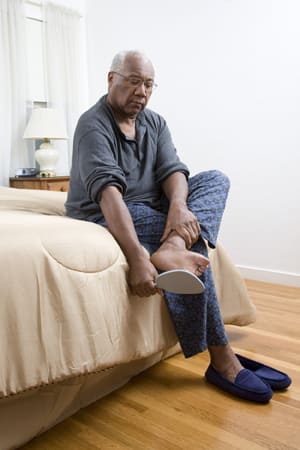
Catch problems early by checking your feet each day for changes. Look at the top and bottom of your feet. Check your heels and between your toes. It may help to use a mirror. If this is hard, ask someone to check for you. Call your doctor if you see a wound, ulceration, ingrown nail, or any changes in your feet. This includes increased heat, swelling, numbness, tingling, pain, and redness.
Wear correct footwear
Always wear shoes and socks, even indoors. Ask your doctor how to choose the right shoe. After buying shoes, bring them to your doctor to be checked for correct fit. Take new shoes off every hour or so to check for red pressure areas on your feet. Each time you put on your shoes, use your fingers first to feel inside for foreign objects.
Common causes of peripheral neuropathy
Some common causes of peripheral neuropathy include:
- Diabetes or other endocrine disorders
- Toxins (such as alcohol)
- Nutritional deficiencies (such as vitamin B-12)
- Kidney disease
- Injury
- Repetitive stress (such as carpal tunnel syndrome)
- Autoimmune disease
- Cancer and tumors
- Chemotherapy
- Arthritis
- Being older
- Hereditary
- Infection
Diagnosis and treatment
Diagnosis of peripheral neuropathy includes a complete history and physical exam. Lab tests, including blood work and imaging, often help find the cause. Special nerve tests often help. These include nerve conduction velocity studies (NCV) and electromyography (EMG).
Treatment focuses on treating the underlying problem and symptoms. This may include:
- Medicines
- Injections
- TENS (transcutaneous electrical nerve stimulation)
- Acupuncture
- Massage
- Managing blood sugar levels if you have diabetes
Online Medical Reviewer: Anne Fetterman RN BSN
Online Medical Reviewer: Marianne Fraser MSN RN
Online Medical Reviewer: Rita Sather RN
Date Last Reviewed: 03/01/2024
© 2000-2026 The StayWell Company, LLC. All rights reserved. This information is not intended as a substitute for professional medical care. Always follow your healthcare professional's instructions.
Need Help? We're Here for You
Our Member and Recipient Services Team is here to help you understand your benefits, find care, or resolve concerns.
800-510-9132
Call NC Quitline
Need support to quit smoking, vaping, or to quit other nicotine products? You can receive support including medicines free of charge:
800-784-8669
Schedule Transportation
Need transportation to a doctor's office, pharmacy, or other covered healthcare service? Contact us to arrange your ride.
800-510-9132
Provider Directory
Need to find a provider like a Primary Care Physician, Specialist, OB/GYN, or a Psychiatrist?
Provider DirectoryRelated Articles
Having Vagus Nerve Stimulator Placement
A vagus nerve stimulator (VNS) is a device that can help prevent seizures. It can also treat depression, obesity, and other conditions. The pulse generator sits in your chest under your skin, and the leads run from the generator to a vagus nerve in your neck. The device is put in during a surgery.
Treatment for Sixth Nerve Palsy
Sixth nerve palsy is a problem with eye movement. It happens because of a problem with the sixth cranial nerve. Learn about treatment for the condition.
Gamma Knife Radiosurgery
Gamma Knife uses very precise beams of gamma rays to treat an area of disease (lesion) or growth (tumor). It’s most often used in the brain.
First Aid: Seizures
Learn what to do, and when to call 911, when someone is having a seizure.


