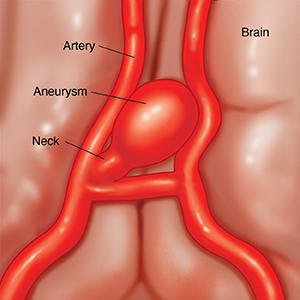
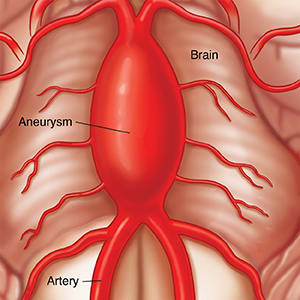
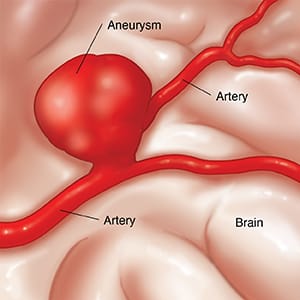
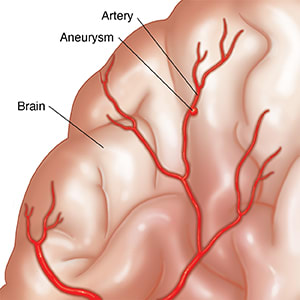
There are several types of brain aneurysms that are classified by shape. These are saccular (also called berry) aneurysms, which are by far the most common. Less common are the fusiform and dissecting types. Brain aneurysms may also be classified by:
- Size (small, large, and giant)
- Location
- Cause (such as a mycotic aneurysm, caused by an infection)
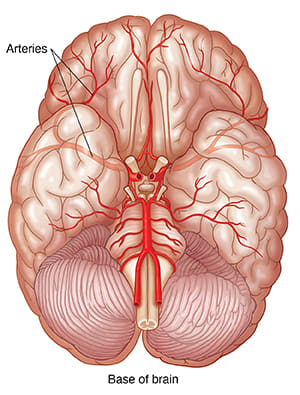
Most aneurysms occur where an artery branches, often at the base of the brain. The risk of an aneurysm bursting (rupturing) can be affected by the shape and location of the aneurysm. The treatment choices vary, depending on the type of aneurysm, its size, and its location.
Online Medical Reviewer: Chris Southard RN
Online Medical Reviewer: Marianne Fraser MSN RN
Online Medical Reviewer: Melinda Murray Ratini DO
Date Last Reviewed: 03/01/2024
© 2000-2026 The StayWell Company, LLC. All rights reserved. This information is not intended as a substitute for professional medical care. Always follow your healthcare professional's instructions.
Need Help? We're Here for You
Our Member and Recipient Services Team is here to help you understand your benefits, find care, or resolve concerns.
800-510-9132
Call NC Quitline
Need support to quit smoking, vaping, or to quit other nicotine products? You can receive support including medicines free of charge:
800-784-8669
Schedule Transportation
Need transportation to a doctor's office, pharmacy, or other covered healthcare service? Contact us to arrange your ride.
800-510-9132
Provider Directory
Need to find a provider like a Primary Care Physician, Specialist, OB/GYN, or a Psychiatrist?
Provider DirectoryRelated Articles
Tension Headaches
Tension headaches cause a dull, steady pain on both sides of the head and in the neck and the back of the head. The eyes may also feel tired. Tension headache can be caused by lack of sleep, poor posture, eyestrain, stress, and other factors.
Cluster Headache
A cluster headache is different from a migraine or a tension headache. Learn about symptoms, triggers, and treatments for a cluster headache.
Understanding Multiple Sclerosis (MS)
Multiple sclerosis (MS) is a disease of the brain and spinal cord. Unfortunately, there is no cure for MS. But there are many treatments, and many people with MS can manage their symptoms and lead active, healthy lives. Read on to learn more about MS and its treatments.
What Is Peripheral Neuropathy?
Peripheral neuropathy is a disease of the nerves in your feet. It may make you unable to sense pain. Lack of pain makes you more likely to injure yourself without knowing it. But you can learn ways to protect your feet from injury.