What is the A1C test?
The A1C is a simple blood test. It measures your child’s average blood sugar level over a period of 2 to 3 months. This shows how well your child's blood sugar is controlled. The better your child's blood sugar is controlled, the less likely they will have complications from diabetes. Your child may have other tests such as fasting blood glucose, glucose tolerance test, or random blood glucose test. But these tests only show blood sugar levels at that moment. They don't show how well your child's blood sugar is controlled over time.
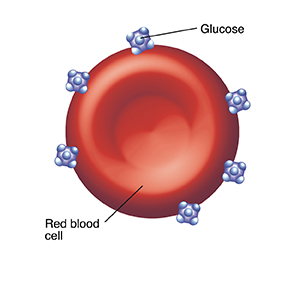
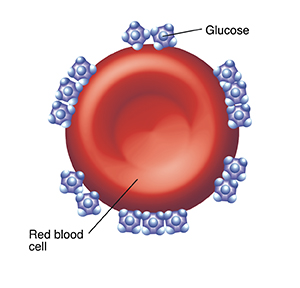
The A1C test measures the amount of glucose that sticks to a protein called hemoglobin. Hemoglobin is in red blood cells. The more glucose stuck to the red blood cells, the higher your child’s average blood sugar has been over time.
An A1C result is given as a percentage. Most people without diabetes have an A1C level of 5.7% or lower.
Your child’s target A1C number
Your child’s health care provider will tell you what your child’s target A1C number should be. It will depend on your child's age, overall health, and other factors. The A1C goal for children and teens is less than 7.5%. Your child will likely need an A1C test every 3 months. You will still need to check your child's blood sugar several times a day. Tell the provider if the daily blood sugar results don't match the A1C result. Certain diseases, conditions, or medicines may tend to either raise or lower the A1C on their own. This can make the management of blood sugar more challenging.
Where to learn more
For more information about diabetes, visit these websites:
-
Breakthrough T1D (formerly Juvenile Diabetes Research Foundation) www.breakthrought1d.org
-
Association of Diabetes Care & Education Specialists www.adces.org
-
American Association of Clinical Endocrinologists www.aace.com
-
National Diabetes Information Clearinghouse www.niddk.nih.gov/health-information/diabetes
Featured in
Online Medical Reviewer: Dan Brennan MD
Online Medical Reviewer: Rita Sather RN
Online Medical Reviewer: Robert Hurd MD
Date Last Reviewed: 03/01/2025
© 2000-2026 The StayWell Company, LLC. All rights reserved. This information is not intended as a substitute for professional medical care. Always follow your healthcare professional's instructions.
Need Help? We're Here for You
Our Member Services team is here to help you understand your benefits, find care, or resolve concerns.
1-800-510-9132
Call NC Quitline
Need support to quit smoking, vaping, or to quit other nicotine products? You can receive support including medicines free of charge:
1-800-784-8669
Schedule Transportation
Need transportation to a doctor's office, pharmacy, or other covered healthcare service? Contact us to arrange your ride.
1-800-510-9132
Provider Directory
Need to find a provider like a Primary Care Physician, Specialist, OB/GYN, or a Psychiatrist?
Provider DirectoryRelated Articles
Diabetes and Your Child: Tests and Vaccines
Most children with diabetes need to see their healthcare provider for checkups at least 4 times a year. Your child will need tests and vaccines. Read on to learn more.
For Parents: Diabetes Care (12 to 17 years)
Learn how to work with the doctor, nurse, diabetes educator, and others to help manage your child's diabetes.
Diabetes and Your Child: Considering an Insulin Pump
Many parents and children find that an insulin pump helps improve blood sugar management. Learn how it works, what the risks and benefits are, and more.
Type 1 Diabetes and Your Child: Using Insulin
Insulin is given by injection into the fat just under the skin. It's not hard to learn to give insulin injections. Here are tips to help.