A hernia bulge may appear suddenly, but hernias often take months or years to develop. They grow larger as pressure inside the body presses the intestines or other tissues out through a weak area in the belly (abdominal) wall. This is often at the belly button or a site of a past surgery. With time, these tissues can bulge out beneath the skin.
Stages of hernia development
The wall weakens or tears: The abdominal lining bulges out through a weak area and begins to form a hernia sac. The sac may contain fat, intestine, or other tissues. At this point, the hernia may not cause a visible bulge.
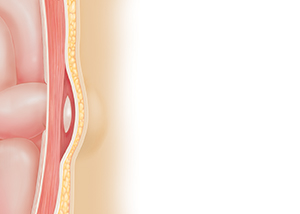
The intestine pushes into the sac: As the intestine pushes farther into the sac, it forms a visible bulge. The bulge may flatten when you lie down or push against it. This is called a reducible hernia. It does not cause any immediate danger.
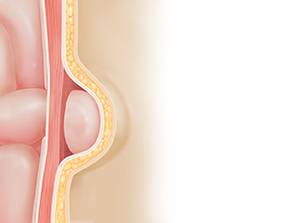
The intestine may become trapped: The sac containing the intestine may become trapped by muscle (incarcerated). If this happens, you won’t be able to flatten the bulge. You may also have pain. You may need prompt treatment.
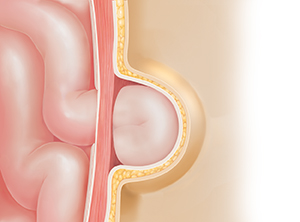
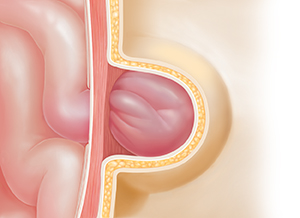
The intestine may become strangulated: If the intestine is tightly trapped, it becomes strangulated. The strangulated area loses blood supply and may die. This can cause severe pain and block the intestine. You need emergency surgery.
Date Last Reviewed: 04/01/2024
© 2000-2026 The StayWell Company, LLC. All rights reserved. This information is not intended as a substitute for professional medical care. Always follow your healthcare professional's instructions.
Need Help? We're Here for You
Our Member and Recipient Services Team is here to help you understand your benefits, find care, or resolve concerns.
800-510-9132
Call NC Quitline
Need support to quit smoking, vaping, or to quit other nicotine products? You can receive support including medicines free of charge:
800-784-8669
Schedule Transportation
Need transportation to a doctor's office, pharmacy, or other covered healthcare service? Contact us to arrange your ride.
800-510-9132
Provider Directory
Need to find a provider like a Primary Care Physician, Specialist, OB/GYN, or a Psychiatrist?
Provider DirectoryRelated Articles
Intestinal Obstruction
If your healthcare provider determines that you have an intestinal obstruction, it means that something is blocking your intestine. Food and stool may not be able to move freely. Read on to learn more about this condition, including symptoms, diagnosis, and treatment.
Ostomy Care: Emptying Your Pouch
You need to empty a drainable pouch when it gets to be about one-third full. To empty your pouch, follow the steps described here in order.
Gastritis or Ulcer, No Antibiotic Treatment
Gastritis is irritation and inflammation of the stomach lining. An ulcer is an open sore in the lining of the stomach. The causes and symptoms of gastritis and ulcers are very similar.
Ileostomy: Caring for Your Stoma
You need to take care of your stoma and the skin around it (peristomal skin). That means keeping the stoma and the skin clean. It also means protecting the skin from moisture and contact with stool. This helps prevent skin problems and odor.


