Salmonella infection (salmonellosis) is an intestinal illness caused by salmonella bacteria. You or your child can be infected by eating or drinking contaminated food or water. Contamination occurs when food or water comes in contact with stool from infected people or animals. Beef, pork, chicken, eggs, and unpasteurized milk are more likely to have salmonella than other foods. Salmonella is most often passed through food that hasn’t been cooked enough or that comes into contact with raw meat or eggs. Unwashed hands of someone with the infection are another main source of salmonella infection. This is often during food preparation, such as in restaurants. Some animals such as domestic reptiles and birds often carry salmonella but are not ill. Touching these animals can pass on salmonella.
What are common symptoms of salmonella infection?
The following symptoms can appear
-
Fever
-
Stomach cramps
-
Diarrhea
-
Vomiting
-
Nausea
Your child can also be infected and have no symptoms at all.
How is salmonella infection diagnosed?
The doctor examines your child. A stool sample is requested to check for the presence of salmonella. More than one stool sample may be needed. If your child has a fever, blood tests (culture) might be done to find out if salmonella is the cause.
How is salmonella infection treated?
-
The illness can last
5 to 7 days. -
Medicines that kill bacteria (antibiotics) may be prescribed. But most children get better with no treatment. In some cases, antibiotics may make the illness last longer. If antibiotics are prescribed, be sure your child finishes all of the medicine even if symptoms are better.
-
Don’t give your child medicine for diarrhea unless told to by your child's doctor. It can make the illness last longer and decrease the body’s ability to get rid of salmonella.
-
Give your child plenty of water or a children’s electrolyte solution to drink. This helps prevent dehydration.
-
It may take several weeks for the bacteria to clear from your child’s body even after symptoms have gone away.
When to contact your child's doctor
Contact your child’s doctor or get medical care right away if your child:
-
Has severe diarrhea that lasts longer than
2 days. -
Has bloody diarrhea.
-
Shows signs of dehydration. These include very dark or little urine, excessive thirst, dry mouth, no tears when crying, or dizziness.
-
Cries and can’t be consoled.
Call 911
Call
-
Seems very tired, slow-moving, or doesn’t respond.
How can salmonella infection be prevented?
To prevent your child from passing on a salmonella infection:
-
Clean your child’s bottom well when changing diapers. Afterward, wash your hands with soap and water. Do the same for your child.
-
Keep your child home from daycare or school until cleared by the doctor.
To lessen the chances of a salmonella infection in the future:
-
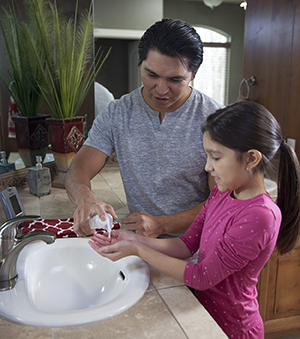
Wash your hands with soap and clean, running water often. Do this before preparing meals or eating food, after going to the bathroom, and handling pets. Teach your child to do the same.
-
Use a food thermometer when cooking. Cook poultry to at least 165°F (73.8°C). Cook pork, beef, and lamb cuts to at least 145°F (62.7°C). Cook ground meats to at least 160°F (71.1°C). Cook egg dishes to at least 160°F (71.1°C). Cook single eggs until the yolks are firm, not runny. Wash or peel fruits and vegetables before eating.
-
Wash cutting boards and utensils with hot water and soap after each use. Clean kitchen counters with bleach or disinfectant.
-
Know about typhoid fever if you're traveling. Typhoid fever is a form of salmonella infection. It may be recommended that travelers be vaccinated against typhoid fever before going to certain areas of the world where there is a high risk of the illness.
Featured in
Online Medical Reviewer: Barry Zingman MD
Online Medical Reviewer: L Renee Watson MSN RN
Online Medical Reviewer: Rita Sather RN
Date Last Reviewed: 09/01/2025
© 2000-2026 The StayWell Company, LLC. All rights reserved. This information is not intended as a substitute for professional medical care. Always follow your healthcare professional's instructions.
Need Help? We're Here for You
Our Member and Recipient Services Team is here to help you understand your benefits, find care, or resolve concerns.
800-510-9132
Call NC Quitline
Need support to quit smoking, vaping, or to quit other nicotine products? You can receive support including medicines free of charge:
800-784-8669
Schedule Transportation
Need transportation to a doctor's office, pharmacy, or other covered healthcare service? Contact us to arrange your ride.
800-510-9132
Provider Directory
Need to find a provider like a Primary Care Physician, Specialist, OB/GYN, or a Psychiatrist?
Provider DirectoryRelated Articles
Flu Vaccine for Children
A flu vaccine is the best protection against the flu (influenza) for your child and other family members. It's best to get vaccinated each year, as soon as the vaccine is available in your area.
E. Coli Intestinal Infection
E. coli is a common bacteria found in the environment, foods, and intestines of people and animals. Most types of E. coli are harmless. But certain types are harmful and can cause severe illness directly or by making toxins. Read on to learn more.
When Your Child Has the Hepatitis B Virus (HBV)
Your child has been diagnosed with a hepatitis infection. Hepatitis causes inflammation of the liver. This document covers symptoms, diagnosis, and treatment of a hepatitis B infection.
When Your Child Has Scarlet Fever
Scarlet fever is an illness that appears as a red (scarlet) rash on the body. It is caused by the same bacteria that causes strep throat. Here's what you need to know.