You need to keep the skin around the feeding tube dry and clean. This helps prevent soreness and infection. The mouth also needs to be cleansed, even though food isn’t taken through it.
Cleaning the skin
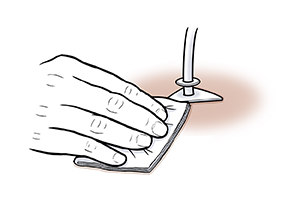
Gently wash the skin around the feeding tube each day. Follow these steps:
-
Wash your hands. Wet a soft cloth or gauze with warm, soapy water.
-
Gently wipe the skin around the feeding tube. Also wipe the bolster and the base of the feeding tube.
-
Rinse well with clear, warm water.
-
Pat dry with a soft cloth.
Checking under the bolster
A bolster is a piece of soft plastic that sits directly on top of the exit site. The bolster helps to keep your feeding tube from moving further inside your stomach. Not all feeding tubes have a bolster.
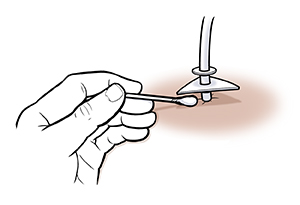
When you wash the skin, clean and check under the bolster. Follow these steps:
-
Gently lift the bolster just enough to get a cotton swab under it. Be careful not to pull on the feeding tube.
-
Check for redness, swelling, bleeding, or leakage around the opening.
-
Dip a cotton swab in warm water and gently clean under the bolster. Pat the skin dry.
-
Apply a protective skin barrier or antibacterial ointment if your health care provider tells you to.
-
Gently push the bolster back against the skin. Make sure it's not too tight against the skin.
-
Give the feeding tube a gentle 1/4 turn. This helps keep the bumper from sticking to the inside of the stomach.
-
Wash your hands.
Caring for the mouth
Good oral health care is still important to help keep breath fresh, teeth healthy, and prevent infections and tooth decay.
To keep the mouth clean, follow these steps:
-
Brush the teeth or dentures at least once daily with a soft toothbrush.
-
Wipe the inside of the mouth with a damp washcloth.
-
Apply a lip balm to keep the lips moist.
Online Medical Reviewer: Lalitha Kadali
Online Medical Reviewer: Rita Sather RN
Online Medical Reviewer: Sabrina Felson MD
Date Last Reviewed: 01/01/2025
© 2000-2026 The StayWell Company, LLC. All rights reserved. This information is not intended as a substitute for professional medical care. Always follow your healthcare professional's instructions.
Need Help? We're Here for You
Our Member Services team is here to help you understand your benefits, find care, or resolve concerns.
1-800-510-9132
Call NC Quitline
Need support to quit smoking, vaping, or to quit other nicotine products? You can receive support including medicines free of charge:
1-800-784-8669
Schedule Transportation
Need transportation to a doctor's office, pharmacy, or other covered healthcare service? Contact us to arrange your ride.
1-800-510-9132
Provider Directory
Need to find a provider like a Primary Care Physician, Specialist, OB/GYN, or a Psychiatrist?
Provider DirectoryRelated Articles
Ileostomy: Dealing with a Food Blockage
After an ileostomy, it may be harder to digest foods that are high in fiber. Eaten in large amounts, these foods can clump together and cause a blockage. Learn about the signs of a blockage and what to do if you have one.
Colostomy: Caring for Your Stoma
You need to take care of your stoma and the skin around it (peristomal skin). This helps prevent skin problems and odor.
What Is a Gluten-Free Diet?
Many people are reducing or eliminating their dietary intake of gluten, a protein found in wheat, rye, barley, and some other grains. But only those who have celiac disease need to completely stop eating gluten.
Gastrostomy Feeding Tube Care: Flushing
Learn how to keep your gastrostomy tube from getting clogged by flushing it with warm water after each feeding and before and after giving any medicines.