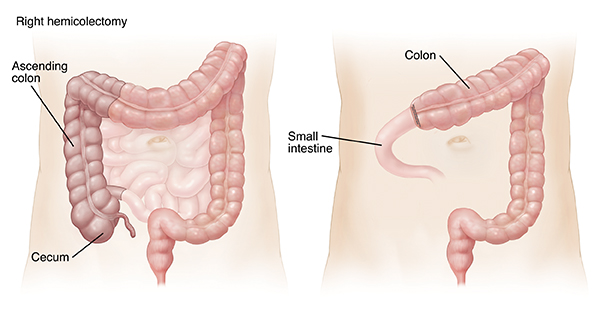
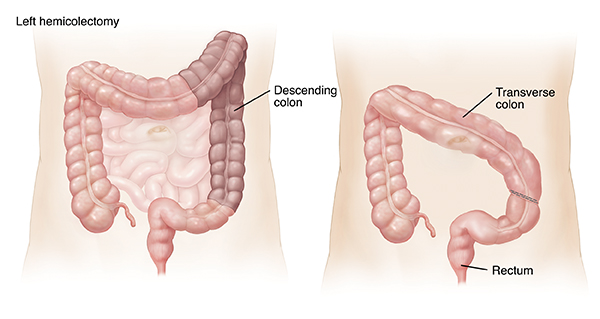
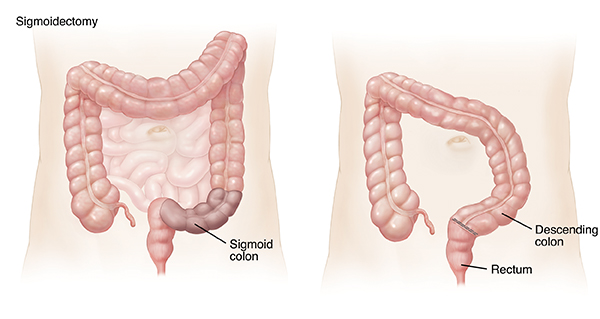
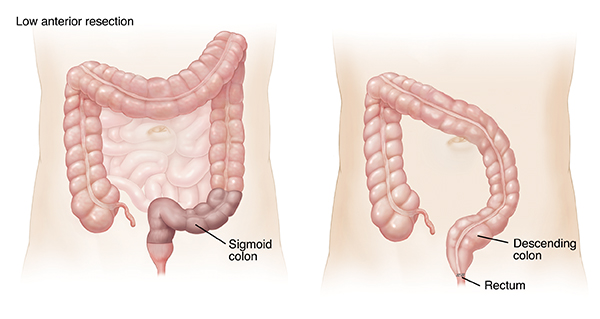
In a colon resection, part of the colon is taken out (resected) during surgery. The most common types of colorectal resection are listed below. Your surgeon will explain the one that is right for you.
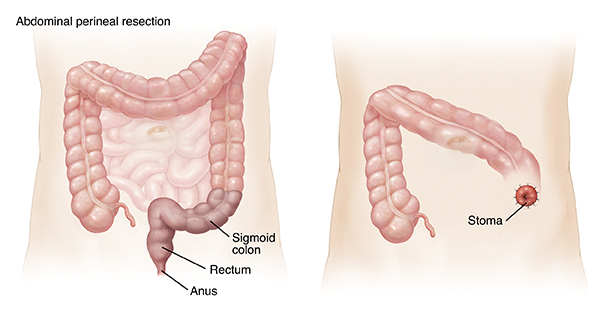
Colostomy
After surgery, the colon and rectum may need to be kept clear of stool while they heal. In other cases, the rectum has been taken out or it can’t be reconnected to the rest of the colon. In either case, you need a colostomy. This makes a new opening (stoma) in the belly (abdomen) so waste can leave the body. You may need the new opening for a short time, or permanently. If you had a colostomy during your surgery, your health care providers will help you learn how to care for it.
Online Medical Reviewer: Marianne Fraser MSN RN
Online Medical Reviewer: Raymond Turley Jr PA-C
Online Medical Reviewer: Robyn Zercher FNP
Date Last Reviewed: 01/01/2025
© 2000-2026 The StayWell Company, LLC. All rights reserved. This information is not intended as a substitute for professional medical care. Always follow your healthcare professional's instructions.
Need Help? We're Here for You
Our Member and Recipient Services Team is here to help you understand your benefits, find care, or resolve concerns.
800-510-9132
Call NC Quitline
Need support to quit smoking, vaping, or to quit other nicotine products? You can receive support including medicines free of charge:
800-784-8669
Schedule Transportation
Need transportation to a doctor's office, pharmacy, or other covered healthcare service? Contact us to arrange your ride.
800-510-9132
Provider Directory
Need to find a provider like a Primary Care Physician, Specialist, OB/GYN, or a Psychiatrist?
Provider DirectoryRelated Articles
Treating Hemorrhoids: Removal
If your symptoms persist, your health care provider may recommend removing the hemorrhoid. This can be done in your provider's office or at a surgical center.
Perianal Abscess, Incision and Drainage
A perianal abscess may need an incision to drain the puss from it. Antibiotics may be needed to treat the infection, as well.
Feeding Tube Insertion
Learn how to care for yourself at home after you've had a feeding tube inserted.
Treating Gastritis
A medical evaluation will be done to find out the cause of your symptoms. Then treatment can begin. It may include taking certain medicines and making lifestyle changes.


