Giardiasis is an intestinal infection caused by the parasite Giardia. You are most likely to be exposed to Giardia from contaminated water during a camping trip, international travel, or from drinking well-water. You may also become infected by eating contaminated undercooked food. Exposure to the stool of someone who`s infected can also cause infection. A distinctive and classic symptom of Giardia is eruptions (or burps) that smell like sulfur.
When to call your doctor
Call your health care provider if you have:
-
Diarrhea, which often comes and goes.
-
Stomach bloating or fullness.
-
Upset stomach (nausea) or vomiting.
-
Unplanned weight loss.
-
Blood in your stool.
-
Dehydration.
When to call 911
Call 911 if you have:
-
Uncontrolled vomiting.
-
Severe belly pain.
How is giardiasis treated?
You will be examined and will likely have a stool sample checked in a lab. This stool is checked for the parasite that causes the disease. If giardiasis is suspected or confirmed, you will be prescribed an antibiotic that you take for 5 to 7 days. In many cases, this clears the infection.
Preventing giardiasis
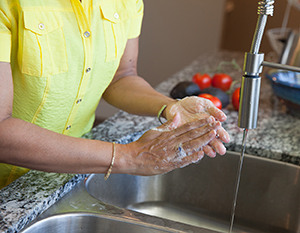
Take these steps to help prevent infection with Giardia:
-
Wash your hands with clean, running water (warm or cold) after using the bathroom and before eating. Wash for at least 20 seconds. Alcohol-based hand sanitizers may not work against Giardia.
-
Wash your hands each time you change a child's diaper.
-
Don't drink from rivers and streams.
-
Use a water treatment kit when camping.
-
Wash or peel raw fruits and vegetables before using.
Online Medical Reviewer: Barry Zingman MD
Online Medical Reviewer: Marianne Fraser MSN RN
Online Medical Reviewer: Sabrina Felson MD
Date Last Reviewed: 01/01/2025
© 2000-2026 The StayWell Company, LLC. All rights reserved. This information is not intended as a substitute for professional medical care. Always follow your healthcare professional's instructions.
Need Help? We're Here for You
Our Member and Recipient Services Team is here to help you understand your benefits, find care, or resolve concerns.
800-510-9132
Call NC Quitline
Need support to quit smoking, vaping, or to quit other nicotine products? You can receive support including medicines free of charge:
800-784-8669
Schedule Transportation
Need transportation to a doctor's office, pharmacy, or other covered healthcare service? Contact us to arrange your ride.
800-510-9132
Provider Directory
Need to find a provider like a Primary Care Physician, Specialist, OB/GYN, or a Psychiatrist?
Provider DirectoryRelated Articles
Bacterial Gastroenteritis
Gastroenteritis is often called the stomach flu. Bacterial gastroenteritis is caused by bacteria, and often causes severe symptoms. Read on to learn more, including how it can be spread, prevention, symptoms, and treatment.
Small Bowel Obstruction
A small bowel obstruction is when part or all of your small intestine (bowel) is blocked. Then digestive contents can't move through the bowel correctly and out of your body. Read on for information about symptoms and treatment.
Understanding Intestinal Obstruction
An intestinal obstruction means that the small or large intestine is blocked at one or more spots. This prevents air, food, stool, and fluid from passing normally through the digestive system.
Large Bowel Obstruction
A large bowel obstruction occurs when part or all of your large intestine is blocked. As a result, waste can't move through your bowel correctly and out of the body. You must be treated right away to manage the blockage.


