If your pancreas suddenly becomes irritated or inflamed, you have acute pancreatitis. Acute pancreatitis is often very painful. Emergency medical treatment is usually needed. Chronic pancreatitis is a condition where your pancreas remains inflamed. It can lead to pain and other complications.
Symptoms of acute pancreatitis
Symptoms include:
-
Severe pain in your upper belly radiating to your back
-
Nausea and vomiting
-
Belly swelling and tenderness
-
Fever
-
Rapid pulse
-
Shallow, fast breathing
Treating acute pancreatitis
If you have acute pancreatitis, you may be in the hospital for a few days. For part of this time, you likely won’t be allowed to eat or drink. This lets your pancreas rest and heal. If your pancreatitis is bad, you may get nutrition and fluids through a feeding tube. Medicines are given to help ease pain.
Causes of pancreatitis
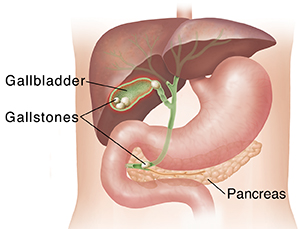
Gallstones are 1 of the most common causes of pancreatitis. These hard stones form in the gallbladder, an organ located near the pancreas. These 2 organs share a passage into the small intestine called the common bile duct. But fluid can't leave the pancreas if gallstones block this duct. The fluid backs up and causes pancreatitis. Alcohol is also a very common cause of pancreatitis. Certain medicines, injury, and infection can also cause pancreatitis. Problems with the structure of the pancreas may also be a cause. Genetic factors can also cause pancreatitis.
If you have chronic pancreatitis
If the pancreas stays inflamed for a long time, chronic pancreatitis may result. Common symptoms include diarrhea, weight loss, and belly pain. Possible complications of chronic pancreatitis include:
-
Diabetes
-
Not absorbing enough nutrients (malnutrition)
-
Pancreatic cancer (rare)
-
Chronic diarrhea
-
Chronic belly (abdominal) pain
Treatment for chronic pancreatitis includes:
-
Medicines to help the pancreas work (enzymes) and to manage pain
-
Dietary changes
-
Stop smoking
-
Treatment for gallstones
-
Don't drink alcohol. The most important thing you can do is to stay away from alcohol and smoking to help manage this disease.
Online Medical Reviewer: Jen Lehrer MD
Online Medical Reviewer: Rita Sather RN
Online Medical Reviewer: Robyn Zercher FNP
Date Last Reviewed: 03/01/2025
© 2000-2026 The StayWell Company, LLC. All rights reserved. This information is not intended as a substitute for professional medical care. Always follow your healthcare professional's instructions.
Need Help? We're Here for You
Our Member and Recipient Services Team is here to help you understand your benefits, find care, or resolve concerns.
800-510-9132
Call NC Quitline
Need support to quit smoking, vaping, or to quit other nicotine products? You can receive support including medicines free of charge:
800-784-8669
Schedule Transportation
Need transportation to a doctor's office, pharmacy, or other covered healthcare service? Contact us to arrange your ride.
800-510-9132
Provider Directory
Need to find a provider like a Primary Care Physician, Specialist, OB/GYN, or a Psychiatrist?
Provider DirectoryRelated Articles
Candida esophagitis
Esophagitis is an inflammation of the lining of the esophagus. This can occur from acid reflux or an infection. The most common cause of infection is a fungus called candida.
What Are Gallstones?
Gallstones form when certain substances in the bile crystallize and become solid. Read on for details about symptoms, diagnosis, and treatment.
Understanding Liver Abscess
A liver abscess is a pocket of pus that forms in the liver. It must be treated right away to prevent serious problems.
Irritable Bowel Syndrome
Irritable bowel syndrome is a disorder of the intestines. Learn what it is and how to manage it.