An inner ear problem can affect your balance system. Vestibular rehabilitation therapy is a specific type of therapy that helps with symptoms. These include dizziness and problems with balance.
Checking eye movement
The therapist will check for nystagmus. This is a repeated jumpy eye movement that you can't control. Nystagmus in certain positions can show that there is an inner ear problem. It can even show which semicircular canal is affected. The therapist will watch your eyes while you move into different positions.
Treating your condition
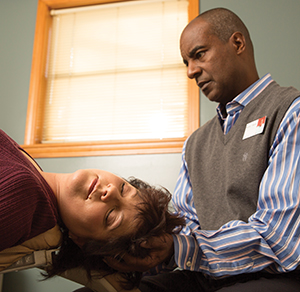
Treatment can include:
-
Canalith repositioning. This is a series of guided head and body movements. It helps move crystals, easing symptoms of benign positional vertigo.
-
Habituation exercises to retrain your balance system. The therapist will teach you how to do these exercises at home.
-
Gaze stabilization exercises. These are to retrain the eyes to stay in focus while your head moves. This helps ease the feeling of being unsteady (disequilibrium).
-
Gait and balance training. This includes standing and walking on different surfaces. The therapist can teach you how to keep your balance and prevent falls.
Doing habituation exercises
The therapist will teach exercises for your condition. Habituation exercises will make you dizzy at first. Just remind yourself that symptoms likely will last for only a minute. If you keep doing the exercises, they will help reduce your dizziness. Then when you do a movement like that in daily life, it is less likely to bring on symptoms.
Getting back into action
Dizziness doesn't have to keep you from exercising. Start with activities that don't make you dizzy. Then ease into more challenging activities. Try these tips:
-
Always exercise with a partner.
-
Stop if you have nausea or feel that you may faint.
-
Walk on a treadmill, holding on to the handles for support. Be sure you are connected to the treadmill's emergency stop.
-
Use a ball machine for sports, such as tennis, until you're ready for a live game. This way, you know where to expect the ball.
-
Don't give up. In most cases, with time and regular therapy, symptoms improve. Most people can return to activities and sports.
Online Medical Reviewer: Ashutosh Kacker MD
Online Medical Reviewer: Rita Sather RN
Online Medical Reviewer: Tara Novick BSN MSN
Date Last Reviewed: 12/01/2024
© 2000-2026 The StayWell Company, LLC. All rights reserved. This information is not intended as a substitute for professional medical care. Always follow your healthcare professional's instructions.
Need Help? We're Here for You
Our Member and Recipient Services Team is here to help you understand your benefits, find care, or resolve concerns.
800-510-9132
Call NC Quitline
Need support to quit smoking, vaping, or to quit other nicotine products? You can receive support including medicines free of charge:
800-784-8669
Schedule Transportation
Need transportation to a doctor's office, pharmacy, or other covered healthcare service? Contact us to arrange your ride.
800-510-9132
Provider Directory
Need to find a provider like a Primary Care Physician, Specialist, OB/GYN, or a Psychiatrist?
Provider DirectoryRelated Articles
How Hearing Aids Can Help You
Many people find that a correctly selected and fitted hearing aid helps them hear much better. Here's what you need to know.
Caring for a Hearing Aid
A detailed look at how to care for your hearing aid, including daily cleaning and changing batteries. Includes safety tips on keeping hearing aid batteries out of the reach of children and pets.
Choices for Hearing Protection
Learn about how earplugs and earmuffs can protect you from hearing damage.
Assistive Listening Devices (ALDs)
ALDs can help you hear better. They are used alone or with a hearing aid. ALDs amplify sounds that you may hear in your daily life. Read on to learn about the different kinds of ALDs.


