You’ll start feeling back to normal a day or two after getting home. But don’t forget that you just had surgery. You need to take it easy, even if you feel fine. Follow any instructions your healthcare provider gives you. In most cases, stitches dissolve on their own.
Speeding your recovery
These tips can help speed your recovery:
-
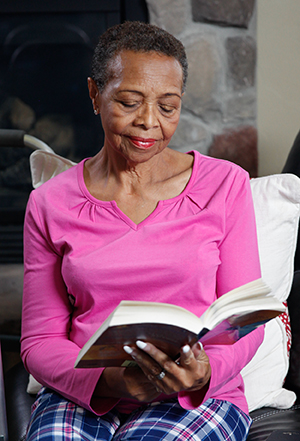
Spend your first few days relaxing at home. You can read, watch TV, or do other quiet, restful activities.
-
Don’t do strenuous activities until your healthcare provider says it’s OK (often 1 to 4 weeks).
-
Take medicine as instructed, often aspirin or clopidogrel.
-
Don’t drive until your healthcare provider says it’s OK. This will most likely take 1 to 4 weeks.
-
Once your provider says you can shower again, it’s OK to get the area of your incision wet. But don’t scrub it.
-
If you shave, be careful around the wound. You may want to use an electric razor.
When to call 911
A stroke is a medical emergency. Call
-
Weakness, tingling, or loss of feeling on one side of your face or body
-
Sudden double vision or trouble seeing in one or both eyes
-
Sudden trouble talking or slurred speech
-
Sudden, severe headache
B.E. F.A.S.T. is an easy way to remember the signs of a stroke. When you see these signs, you'll know that you need to call
-
B is for balance. Sudden loss of balance or coordination.
-
E is for eyes. Vision changes in one or both eyes.
-
F is for face drooping. One side of the face is drooping or numb. When the person smiles, the smile is uneven.
-
A is for arm weakness. One arm is weak or numb. When the person lifts both arms at the same time, one arm may drift downward.
-
S is for speech difficulty. You may notice slurred speech or trouble speaking. The person can't repeat a simple sentence correctly when asked.
-
T is for time to call 911. If someone shows any of these symptoms, even if they go away, call
911 right away. Make note of the time the symptoms first appeared.
When to call your healthcare provider
Contact your healthcare provider right away if you have any of these:
-
Swollen neck
-
Redness or fluid coming from the wound
-
Your face, an arm. or a leg becomes numb or weak
-
Sudden changes in vision or loss of vision in one eye
-
Trouble speaking, swallowing, or breathing
-
Fever of 100.4°F (38°C) or higher, or as directed by your provider
-
Severe headache or eye pain on the same side of the body you had surgery on
If your healthcare provider’s office is closed, go to the hospital emergency room.
Featured in
Author: kramessup
Date Last Reviewed: 08/01/2022
© 2000-2026 The StayWell Company, LLC. All rights reserved. This information is not intended as a substitute for professional medical care. Always follow your healthcare professional's instructions.
Need Help? We're Here for You
Our Member and Recipient Services Team is here to help you understand your benefits, find care, or resolve concerns.
800-510-9132
Call NC Quitline
Need support to quit smoking, vaping, or to quit other nicotine products? You can receive support including medicines free of charge:
800-784-8669
Schedule Transportation
Need transportation to a doctor's office, pharmacy, or other covered healthcare service? Contact us to arrange your ride.
800-510-9132
Provider Directory
Need to find a provider like a Primary Care Physician, Specialist, OB/GYN, or a Psychiatrist?
Provider DirectoryRelated Articles
Heart Attack: Leaving the Hospital
If you had a heart attack, ask your health care provider these questions before you leave the hospital.
Discharge Instructions for Varicose Vein Surgery
You had a procedure in which your varicose veins were surgically removed. Here's what you can do to help with your recovery after surgery.
After Minimally Invasive Heart Surgery: In the Hospital
Learn what to expect in the hospital after you have minimally invasive heart surgery.
PAD Treatment: Recovering from Atherectomy
See what to expect as you recover from the atherectomy procedure.