What is HUS?
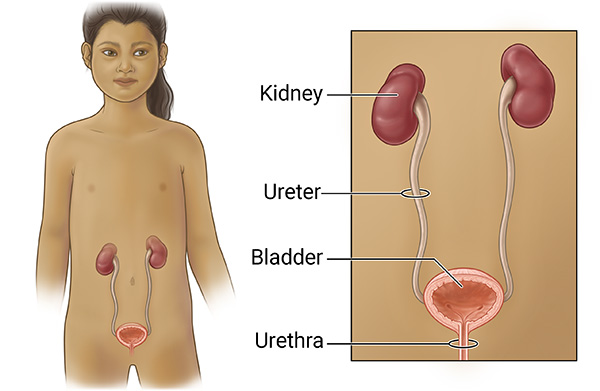
Hemolytic uremic syndrome (HUS) is a rare, potentially serious condition that affects blood and blood vessels. Small blood clots are formed throughout the body. These clots block the flow of blood to vital organs, such as the heart, brain, and kidneys.
HUS mainly affects children younger than 10 years old. It is the most common cause of acute kidney injury in children. It often causes:
-
Damage to the lining of blood vessel walls.
-
Destruction of blood platelets. These are the cells involved in clotting.
-
Destruction of red blood cells. These are the cells that carry oxygen. This damage results in anemia. When the kidneys and glomeruli—the tiny units within the kidneys where blood is filtered—become clogged with the damaged red blood cells, they are unable to do their jobs. The child can develop an acute kidney injury .This is the sudden and temporary loss of kidney function.
-
Kidney failure occurs from damage to the tiny blood vessels of the kidneys. The kidneys can't filter waste and excess fluid from the blood.
What causes HUS?
Most cases of HUS happen after an infection in the digestive tract caused by a certain type of E. coli bacteria. Diarrhea and upper respiratory infections are the most common factors leading to HUS. This type of E. coli can be found in unpasteurized or raw milk, unwashed contaminated raw fruits and vegetables, contaminated juice, contaminated water, and undercooked meat. It is one of the causes of restaurant-related food poisoning outbreaks. HUS is less common in adults. But it may occur more often in women who:
-
Are pregnant.
-
Have been taking birth control pills.
-
Have recently had a baby or have birth-related problems.
How might HUS get worse?
The first stage of HUS often lasts from 1 to 15 days. It may include gastrointestinal symptoms, such as:
-
Belly pain.
-
Bloody diarrhea.
-
Fever and chills.
-
Vomiting.
-
Headache.
Severe problems in the bowel and colon may develop in some cases. In these cases, even if the gastroenteritis has stopped, a child may still have these symptoms:
-
Irritability.
-
Extreme tiredness (fatigue).
-
Small, unexplained bruises or small, clot-sized hemorrhages visible in the mucous lining of the mouth.
-
Pale skin.
The child may make little urine. This is because damaged red blood cells and other factors may clog the tiny blood vessels in the kidneys or cause scars in the kidneys. This makes the kidneys work harder to remove waste and extra fluid from the blood.
The body can't get rid of extra fluid and waste. This may cause:
-
High blood pressure.
-
Swelling of the hands and feet.
-
Fluid buildup (edema).
The symptoms of HUS may look like other conditions or health problems. See your doctor for diagnosis.
How is HUS treated?
No known treatment can stop the progress of the syndrome once it has started.
Most treatments are aimed at easing symptoms and preventing further complications. This may include:
-
Treating high blood pressure.
-
Maintaining specific levels of fluids and salts.
-
I.V. (intravenous) fluids and nutritional supplements with feeding tubes.
-
Blood transfusions.
-
Kidney dialysis.
-
Medicine.
What is the prognosis for HUS?
Most children with HUS recover fully. But a few will have lasting kidney damage. The long-term outlook is related to how badly the kidneys and other organs, such as the brain, pancreas, liver, or heart, are affected.
Online Medical Reviewer: Amy Finke RN BSN
Online Medical Reviewer: Marc Greenstein MD
Online Medical Reviewer: Raymond Kent Turley BSN MSN RN
Date Last Reviewed: 06/01/2025
© 2000-2026 The StayWell Company, LLC. All rights reserved. This information is not intended as a substitute for professional medical care. Always follow your healthcare professional's instructions.
Need Help? We're Here for You
Our Member Services team is here to help you understand your benefits, find care, or resolve concerns.
1-800-510-9132
Call NC Quitline
Need support to quit smoking, vaping, or to quit other nicotine products? You can receive support including medicines free of charge:
1-800-784-8669
Schedule Transportation
Need transportation to a doctor's office, pharmacy, or other covered healthcare service? Contact us to arrange your ride.
1-800-510-9132
Provider Directory
Need to find a provider like a Primary Care Physician, Specialist, OB/GYN, or a Psychiatrist?
Provider DirectoryRelated Articles
Horseshoe Kidney (Renal Fusion) in Children
Horseshoe kidney is when the two kidneys join (fuse) together at the bottom. They form a U shape like a horseshoe.
Discharge Instructions for Pyelonephritis (Child)
Pyelonephritis is a kidney infection that can be serious and can damage the kidneys. People with severe infection are often hospitalized. Here's what you can do at home to help your child.
Discharge Instructions for Kidney Transplant Biopsy
Your doctor removed a small piece of tissue from your transplanted kidney to examine it for signs of damage or rejection. The results of a transplant biopsy are usually available within a few hours, so if treatment is needed, it can be started as soon as possible.
Abdominal X-ray
An abdominal X-ray may be done to check the area for causes of belly pain. It can also be done to find an object that has been swallowed or to look for a blockage or a hole in the intestine. Read on to learn what to expect before, during, and after this imaging test.


