When you have COPD, you may be dealing with mucus. Mucus is a thick, sticky fluid. It's also known as sputum or phlegm. It's normal for the lungs to make some mucus. Mucus helps trap harmful particles in the air you breathe in. These particles are called irritants. They include things such as cigarette smoke, germs, dust, and chemicals.
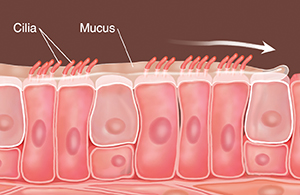
Inside the lungs, air moves through tubes called airways. In healthy lungs, tiny hairs (cilia) line the airways. The hairs sweep mucus up to the throat. Then the mucus and irritants are coughed out, sneezed out, or swallowed. This helps to protect the lungs and the airways.
How does COPD cause mucus?
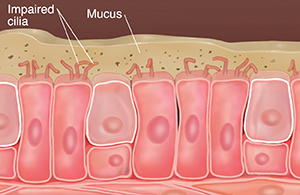
COPD is a term for two main conditions. These are chronic bronchitis and emphysema. The main irritant that causes COPD is cigarette smoke. With chronic bronchitis, the airways become irritated and swell. The muscles that surround them may tighten. The damaged airways also make more mucus than normal. They do this to try to clear the irritants away. But the mucus builds up. This can cause an ongoing cough as the body tries to remove mucus. The extra mucus and the swollen, tight airways make it harder to breathe. Less air gets in and out of the lungs.
Smoking also damages or destroys the cilia in the airways. Damaged cilia can’t move. So they can't sweep mucus, smoke, and other particles out of the lungs. This makes the lungs more likely to become infected.
Treatment for mucus
There are treatments that can help you manage the extra mucus and other symptoms of COPD. These treatments include:
-
Bronchodilator medicines. These medicines help open the airways. This makes it easier to clear mucus from the lungs. You usually take these medicines with an inhaler. This allows the medicine to go straight to the lungs. Medicine can also be taken with a nebulizer machine.
-
Combination medicines. These include a bronchodilator and a steroid. Steroids reduce swelling and inflammation that cause you to make mucus.
-
Antibiotics. A respiratory infection can lead to more mucus and coughing. Antibiotics are medicines that help treat bacterial infections.
-
Mucolytic medicines. These medicines thin the mucus, making it easier to cough up.
Your doctor will work with you to decide on the best treatment plan for you.
Self-care tips for mucus
Keeping your lungs clear of mucus helps prevent shortness of breath and other symptoms. Here are things you can do to reduce mucus.
-
Stop smoking. This is the most helpful step you can take. As soon as you quit, your body starts to repair the damage caused by smoking. If you need help quitting, talk with your doctor.
-
Avoid secondhand smoke and other irritants. Try to stay away from smoke, chemicals, fumes, pollen, and dust as much as you can. Don’t let anyone smoke in your home or around you. Stay indoors on smoggy days.
-
Prevent lung infections. Having COPD increases your risk for infections. These include the flu, pneumonia, and COVID-19. Get vaccines as directed by your doctor. Stay away from crowded places during cold and flu season. And avoid people who are sick.
-
Wash your hands often. This helps prevent infections. Wash your hands with soap and water for at least 20 seconds. When you can't wash your hands, use hand sanitizer with at least 60% alcohol.
-
Limit dairy products. Dairy products can make mucus thicker for some people. If dairy affects you, enjoy milk, ice cream, and cheese in small amounts.
-
Drink plenty of water. This helps make mucus thinner and easier to cough up. Ask your doctor how much water you should drink. For many people, 6 to 8 glasses (8 ounces each) a day is a good goal.
-
Clear your airway. When your lungs make a lot of mucus or it's hard to cough up, airway clearing methods can help. These include coughing methods and postural drainage. Ask your doctor about these methods.
-
Don’t be afraid to be active. Being active may make you short of breath. But exercise can strengthen the muscles that help you breathe. Talk with your doctor about safe exercises for you. Ask what type of exercise you can do. And ask how much you can do.
When to contact your doctor
Contact your doctor or get medical care right away if you have:
-
A fever of 100.4°F (38°C) or higher, or as directed by your doctor.
-
Symptoms that don’t get better, or that get worse.
-
New symptoms.
Date Last Reviewed: 06/01/2025
© 2000-2026 The StayWell Company, LLC. All rights reserved. This information is not intended as a substitute for professional medical care. Always follow your healthcare professional's instructions.
Need Help? We're Here for You
Our Member and Recipient Services Team is here to help you understand your benefits, find care, or resolve concerns.
800-510-9132
Call NC Quitline
Need support to quit smoking, vaping, or to quit other nicotine products? You can receive support including medicines free of charge:
800-784-8669
Schedule Transportation
Need transportation to a doctor's office, pharmacy, or other covered healthcare service? Contact us to arrange your ride.
800-510-9132
Provider Directory
Need to find a provider like a Primary Care Physician, Specialist, OB/GYN, or a Psychiatrist?
Provider DirectoryRelated Articles
Chronic Lung Disease: Controlling Stress
Stress and anxiety can make breathing harder. When it's hard to breathe, it's natural to get anxious and start to panic. This makes you even more short of breath. This sequence is known as the dyspnea cycle, and it's common among people with COPD. The good news is, you have the power to break the cycle.
Pursed-Lip Breathing
Pursed-lip breathing can help you get more oxygen into your lungs when you're short of breath. Learn how and when to do it.
Chronic Lung Disease: My Travel Checklist
Chronic lung disease shouldn't stop you from traveling, visiting family and friends, and enjoying yourself—even if you use oxygen. Here are some helpful travel tips.
Using an Oxygen Tank at Home
Your healthcare provider has prescribed oxygen. This can help make breathing easier. Here are some tips for safely using oxygen at home.


