Hypersensitivity pneumonitis is lung inflammation. It's caused by inhaling allergens in your environment. Allergens are things like molds, fungus, bacteria, dust, or chemicals. Being around allergens sets off the immune system. This leads to inflammation. And it can make it hard to breathe. It can also cause long-term lung damage. Recognizing allergens and treating this condition early can reverse the inflammation in the lungs. This can help prevent permanent lung damage or other long-term problems.
What causes hypersensitivity pneumonitis?
Hypersensitivity pneumonitis is caused by repeated and prolonged exposure to allergens in the environment. This often occurs at home or in the workplace. But not everyone who is around these substances gets this condition.
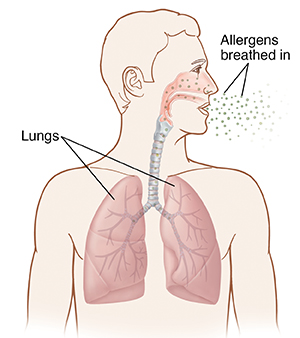
Allergens include:
-
Bacteria.
-
Mold.
-
Fungi.
-
Chemicals
-
Proteins.
These allergens can be found in some work environments, including those of:
-
Farming, vegetable, and dairy cattle workers.
-
Bird and poultry handlers.
-
Animal handlers and veterinarians.
-
Grain and flour processors.
-
Lumber and construction workers.
-
Workers in plastics and electronics industries.
-
Textile workers.
Symptoms of hypersensitivity pneumonitis
You can start to have symptoms 4 to 6 hours after exposure. But it can take several months to years to develop an allergy to the substance. Early symptoms are flu-like and include:
-
Trouble breathing and shortness of breath.
-
Cough.
-
Tight chest.
-
Fever.
-
Chills.
-
Tiredness.
-
Muscle aches.
Later symptoms include weight loss, chronic bronchitis, signs of lung scarring, and clubbing of fingertips or toes.
Treatment for hypersensitivity pneumonitis
This disease can be reversed if diagnosed or found in its early stages. It's best to stay away from the dust or allergen. If you can’t do that, ask your doctor about wearing a respirator.
Your doctor may recommend:
-
Steroids to reduce inflammation.
-
Immune suppressing medicines.
-
Oxygen therapy.
-
Bronchodilators to relax the airways.
-
Pulmonary rehabilitation to help you learn breathing methods and improve your quality of life.
Possible complications of hypersensitivity pneumonitis
If this condition is not treated, you can develop:
-
Permanent lung scarring (pulmonary fibrosis).
-
High blood pressure in the lung arteries (pulmonary hypertension).
-
Heart failure.
Living with hypersensitivity pneumonitis
If you have this condition, it’s key to stay away from the substance that is irritating your lungs. This can help reduce the inflammation in the lungs that can lead to permanent scarring. Follow these steps:
-
Be sure to have any standing water inside or outside your home removed.
-
Keep humidity inside your home or workplace below 60%.
-
Have your air conditioning and heating systems checked regularly.
-
Have any water damage in your home repaired as soon as possible.
Other important lifestyle steps include:
-
Get regular medical care. Keep all appointments with your doctor.
-
If you smoke, quit. Some studies suggest smoking can make the disease worse. Ask your doctor about resources to help you quit.
-
Stay on top of your mental health. Having a chronic disease can take its toll without good support.
-
Keep up to date on vaccines recommended by your doctor, including a yearly flu shot and pneumococcal vaccine.
-
Get regular physical activity if your doctor says it's okay.
When to contact your doctor
Contact your doctor right away if you have:
-
A fever of 100.4°F (38°C) or higher, or as directed by your doctor.
-
Chills.
-
Chest tightness.
-
Cough.
-
Shortness of breath.
Online Medical Reviewer: Jessica Gotwals RN BSN MPH
Online Medical Reviewer: Marianne Fraser MSN RN
Date Last Reviewed: 05/01/2025
© 2000-2026 The StayWell Company, LLC. All rights reserved. This information is not intended as a substitute for professional medical care. Always follow your healthcare professional's instructions.
Need Help? We're Here for You
Our Member Services team is here to help you understand your benefits, find care, or resolve concerns.
1-800-510-9132
Call NC Quitline
Need support to quit smoking, vaping, or to quit other nicotine products? You can receive support including medicines free of charge:
1-800-784-8669
Schedule Transportation
Need transportation to a doctor's office, pharmacy, or other covered healthcare service? Contact us to arrange your ride.
1-800-510-9132
Provider Directory
Need to find a provider like a Primary Care Physician, Specialist, OB/GYN, or a Psychiatrist?
Provider DirectoryRelated Articles
Hyperventilation Syndrome
This sheet can help you take care of yourself when you have hyperventilation syndrome.
Chest Tubes
Your lungs are each surrounded by two layers of membrane. The space between the layers is called the pleural space. Excess fluid, blood, pus, or air in the pleural space makes it hard for the lung to expand and makes breathing difficult. A chest tube is a soft, flexible tube put into the pleural space that drains blood, air, or excess fluid.
Adult CF: Understanding Cystic Fibrosis
Learn about cystic fibrosis and its symptoms, diagnosis, and treatments.
Hemoptysis
Hemoptysis means coughing up blood. There are many causes for this, including minor illnesses like bronchitis. Hemoptysis can also be an early sign of a more serious illness. Here's how to take care of yourself at home.


