A child with ADHD often acts up and tunes out. But you can show your child new ways to react to the world. This process takes time and practice. Working with a counselor may help.
Coping skills
What things upset your child? Perhaps having to do chores or share toys sparks poor behavior. Try to work with your child each day. Assign a simple task. Or talk with your child about the tips below. Show your child how to respond to frustration and anger in useful ways. This can help them learn self-control.
Reinforcing success
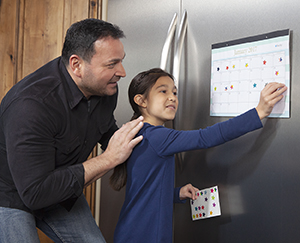
Children with ADHD have trouble learning from past events. Positive feedback helps make lessons stick. Offer praise when a job is well done. This helps your child mark the moment in their mind. Place a sticker on a reward chart to celebrate each success.
Parent’s role
Here are some ways you can help:
-
Teach coping skills after your child has taken a dose of medicine and it has had time to start working. Learning is more likely to happen at such times.
-
Praise your child’s success. Offer a smile and a hug, a positive comment, or a small reward.
-
Set simple, clear rules. Explain what will be taken away if those rules are not followed. Then, no matter how upset your child becomes, follow through.
-
Try to stick to a routine. Prepare your child for any change in that routine and remind them if a change in the routine is going to occur.
-
Help your child stay focused. For instance, stay away from crowded, noisy places if they clearly bother your child.
-
Limit choices. Too many choices can become overwhelming.
-
Coordinate with your child's school so that reinforcement strategies at home and school are the same.
-
Set a supportive climate at home that will allow your child to share any concerns. Children with ADHD are at increased risk for bullying. Your child needs to feel safe to confide in you as soon as they experience any abusive behavior.
-
If age-appropriate, encourage your child to write down questions about their ADHD and bring them to medical follow-up appointments. If your child wishes, encourage them to ask the questions.
-
Respect your personal limitations. Get counseling and support from support groups, professional therapists, and school personnel when you need additional support.
Child’s role
Here are some hints for your child:
-
Encourage your child to try out new ways of dealing with people and places that bother your child. When your child is upset, they might talk, draw, write, throw a ball, or spend some time alone.
-
Tell your child to act like a STAR: Stop, Think, Act, and then Review.
-
Encourage your child to talk to you about any concerns they have.
Online Medical Reviewer: Marianne Fraser MSN RN
Online Medical Reviewer: Paul Ballas MD
Online Medical Reviewer: Raymond Kent Turley BSN MSN RN
Date Last Reviewed: 05/01/2025
© 2000-2026 The StayWell Company, LLC. All rights reserved. This information is not intended as a substitute for professional medical care. Always follow your healthcare professional's instructions.
Need Help? We're Here for You
Our Member Services team is here to help you understand your benefits, find care, or resolve concerns.
1-800-510-9132
Call NC Quitline
Need support to quit smoking, vaping, or to quit other nicotine products? You can receive support including medicines free of charge:
1-800-784-8669
Schedule Transportation
Need transportation to a doctor's office, pharmacy, or other covered healthcare service? Contact us to arrange your ride.
1-800-510-9132
Provider Directory
Need to find a provider like a Primary Care Physician, Specialist, OB/GYN, or a Psychiatrist?
Provider DirectoryRelated Articles
Knowing When to Get Treatment for Mental Health Disorders
Families, spouses, or friends are often the first to suspect that their loved one is challenged by feelings, behaviors, or environmental conditions that cause them to act disruptive, rebellious, or sad.
Knowing When to Get Treatment for Your Child
Common symptoms of a potential emotional, behavioral, or developmental problem include poor grades in school, withdrawal from friends and family, and insomnia.
Treating Schizophrenia
The symptoms of schizophrenia are severe and ongoing. They can disrupt lives and cause great suffering. But treatment may help relieve many of these symptoms. Most often, treatment includes both medicine and counseling (psychotherapy). It also may involve help with social and life skills.
Treating ADHD: Learning More
One of the best ways to help your child is by learning about ADHD.


