Once you know you have endometriosis, you can think about your choices for treatment. Even after treatment, most women have symptoms off and on until menopause. Then, when monthly periods are over for good, symptoms tend to decrease or disappear. In the meantime, there is a lot you can do to help yourself feel better.
Help with emotions
Along with cycles of pain, you may have emotional cycles or mood swings. You may feel frustrated or depressed. Don’t suffer in silence. Talking to someone you trust can really help. Also spend time doing things you enjoy.
Pain control
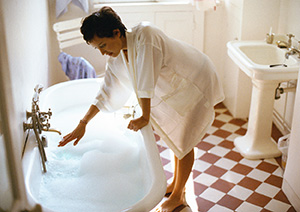
Heat can help limit pain. Soak in a hot bath or use a heating pad. You may also find relief with yoga, meditation, or acupuncture. Acetaminophen and ibuprofen may also help. Those work best if taken just as pain begins, or even just before, if you can to predict when the pain will usually start. If needed, you may be given prescription medicine to reduce cramping and pain during periods. Keep track of your symptoms to help you anticipate and cope with the pain.
Nutrition
For some women, making certain changes in their diet seems to reduce symptoms. These changes include:
-
Eating less refined sugar and white flour.
-
Eating more dairy and get enough vitamin D.
-
Choosing whole-grain breads and cereals.
-
Eating at least 5 fruits and vegetables each day.
-
Talking with your healthcare provider about taking nutritional supplements.
Pregnancy
Following treatment, many women with endometriosis are able to become pregnant. Some of these women find that being pregnant relieves symptoms—at least for a while.
Exercise
Frequent exercise can help control your symptoms. Try to exercise at least 2 hours and 30 minutes over the course of a week. Doing so can help relieve pain, including cramps. Nonimpact activities may offer the most symptom relief. Try walking, swimming, or biking.
Talking about sex
Many women with endometriosis have pain during sex. To increase comfort, you may want to try new positions. Some days of the month may be better than others. Also talk with your partner about other ways you can be intimate. Massage might be a good choice for both of you.
Featured in
Online Medical Reviewer: Donna Freeborn PhD CNM FNP
Online Medical Reviewer: Heather M Trevino BSN RNC
Online Medical Reviewer: Howard Goodman MD
Date Last Reviewed: 09/01/2026
© 2000-2026 The StayWell Company, LLC. All rights reserved. This information is not intended as a substitute for professional medical care. Always follow your healthcare professional's instructions.
Need Help? We're Here for You
Our Member and Recipient Services Team is here to help you understand your benefits, find care, or resolve concerns.
800-510-9132
Call NC Quitline
Need support to quit smoking, vaping, or to quit other nicotine products? You can receive support including medicines free of charge:
800-784-8669
Schedule Transportation
Need transportation to a doctor's office, pharmacy, or other covered healthcare service? Contact us to arrange your ride.
800-510-9132
Provider Directory
Need to find a provider like a Primary Care Physician, Specialist, OB/GYN, or a Psychiatrist?
Provider DirectoryRelated Articles
Contraception/Birth Control
You have a lot of choices when it comes to birth control. Some methods don't need a healthcare provider's visit. But others, like oral contraceptives, are available only by prescription.
Managing PMS: Lifestyle Changes
The trick to coping with PMS is to work helpful strategies into your daily life. Read on to learn more.
Managing PMS: Medicines
With your healthcare provider's help, you may find a medicine that works for you. Make sure you know how to use your medicine. Take medicines only as directed. And always read warning labels.
The Range of Pap Test Results
When your Pap test is sent to the lab, the lab studies your cell samples and reports any abnormal cell changes. Your healthcare provider can discuss these changes with you. In some cases, an abnormal Pap test is due to an infection.


