Pelvic organ prolapse is when 1 or more organs inside the pelvis slip from their normal places. The pelvis is found between the waist and thighs. Normally, muscles and tissues in the pelvic region support the pelvic organs and hold them in place.
What is a normal pelvis?
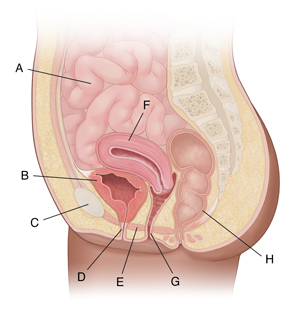
A. The small intestine absorbs nutrients from food.
B. The bladder collects and holds urine.
C. The pubic bone helps protect the pelvic organs.
D. The urethra is the tube that carries urine out of the body.
E. The pelvic floor muscles support organs and other structures in the pelvis.
F. The uterus is where the baby develops when a woman is pregnant.
G. The vagina is the canal from the uterus to the outside of the body.
H. The rectum stores stool until a bowel movement occurs.
What causes pelvic organ prolapse?
There are several causes of pelvic organ prolapse including:
-
Vaginal childbirth
-
Hereditary (genetic) factors
-
Connective tissue disorders
-
Getting older
-
Constant coughing (such as with bronchitis or smoking)
-
Heavy lifting
-
Chronic straining (such as with constipation)
-
Being overweight
What are the symptoms of pelvic organ prolapse?
The symptoms of pelvic organ prolapse include:
-
A feeling of fullness or pressure in your pelvis
-
A sense that a ball or lump is sticking out from the vagina
-
Problems passing urine or having a bowel movement
-
Urine leakage when you cough or use stairs. (But this can happen even without prolapse.)
-
Pain or pressure in your low back
-
Pain when having sex
Featured in
Online Medical Reviewer: Donna Freeborn PhD CNM FNP
Online Medical Reviewer: Heather M Trevino BSN RNC
Online Medical Reviewer: Irina Burd MD PhD
Date Last Reviewed: 09/01/2026
© 2000-2026 The StayWell Company, LLC. All rights reserved. This information is not intended as a substitute for professional medical care. Always follow your healthcare professional's instructions.
Need Help? We're Here for You
Our Member and Recipient Services Team is here to help you understand your benefits, find care, or resolve concerns.
800-510-9132
Call NC Quitline
Need support to quit smoking, vaping, or to quit other nicotine products? You can receive support including medicines free of charge:
800-784-8669
Schedule Transportation
Need transportation to a doctor's office, pharmacy, or other covered healthcare service? Contact us to arrange your ride.
800-510-9132
Provider Directory
Need to find a provider like a Primary Care Physician, Specialist, OB/GYN, or a Psychiatrist?
Provider DirectoryRelated Articles
Pelvic Inflammatory Disease (PID)
Pelvic inflammatory disease or PID is an infection of a woman’s reproductive tract. Scar tissue grows between internal organs leading to ongoing pelvic pain. It can also lead to ectopic pregnancy.
Bartholin’s Cyst: Common Treatments
When the opening of a Bartholin's gland becomes blocked, the gland may swell and form a cyst. Treatment depends on various factors, including the size of the cyst, whether it causes symptoms, and whether it's infected.
Cystocele
When the wall between the bladder and the vagina gets weak, the bladder may drop or sag into the vagina. This disorder is called cystocele.
Understanding PMS and Your Cycle
PMS is a real condition caused by changing levels of hormones during your monthly period. No one knows why some women have PMS and others don't.


