Chemotherapy (chemo) is most often given by IV (intravenous) infusion. This is done through a soft flexible tube (catheter) placed in a vein. The most common types of IV treatment are:
-
IV push (IV bolus). This is given over a few minutes. This type of infusion is often done in an outpatient setting. This may be in a hospital, at a clinic, or at your healthcare provider’s office. Sometimes it’s done at home with the help of a visiting infusion nurse.
-
IV infusion. This is given over 15 to 30 minutes up to several hours. It is often done in an outpatient setting. But for some therapies you may need to stay overnight for 1 or more days at the hospital. In some cases, IV infusions may be given at home.
-
Continuous infusion. This type may last for days or weeks at a time. The medicines are given at a rate that is controlled by a small, portable, electronic pump. This is attached to the IV tubing. And it can be worn at home. This lets you have chemo and continue your normal activities at the same time.
Getting ready for your treatment
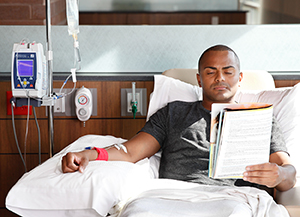
Depending on the type and number of medicines, the length of your IV infusion treatment may range from hours to days. To make this time more pleasant, wear comfortable clothes and bring a comforting blanket. You can also read, or listen to music or programs on portable devices.
Featured in
Online Medical Reviewer: LoCicero, Richard, MD
Online Medical Reviewer: Sather, Rita, RN
Date Last Reviewed: 11/01/2023
© 2000-2026 The StayWell Company, LLC. All rights reserved. This information is not intended as a substitute for professional medical care. Always follow your healthcare professional's instructions.
Need Help? We're Here for You
Our Member and Recipient Services Team is here to help you understand your benefits, find care, or resolve concerns.
800-510-9132
Call NC Quitline
Need support to quit smoking, vaping, or to quit other nicotine products? You can receive support including medicines free of charge:
800-784-8669
Schedule Transportation
Need transportation to a doctor's office, pharmacy, or other covered healthcare service? Contact us to arrange your ride.
800-510-9132
Provider Directory
Need to find a provider like a Primary Care Physician, Specialist, OB/GYN, or a Psychiatrist?
Provider DirectoryRelated Articles
Cancer Treatment and Kidney Damage (Nephrotoxicity)
Some cancer treatments can hurt your kidneys. If your kidneys are damaged, they are less able to remove pee and other waste from your body. And they can't work correctly. Here is what you need to know.
Oral Cancer: Chemotherapy
Chemotherapy uses anticancer medicines to kill cancer cells. The medicines are made to attack and kill cancer cells that grow quickly. Some normal cells also grow quickly. Because of this, chemotherapy can also harm those cells. This can cause side effects.
Radiation Therapy: Support and Resources
Use these resources to help you learn about radiation therapy.
Treating Bladder Cancer: Intravesical Therapy
Some types of bladder tumors are hard to remove completely with surgery. In certain cases, special medicines that kill cancer cells may be put right inside the bladder. This is called intravesical therapy. Read on to learn more.


