Charcot foot is a pattern of bone and joint damage. It can lead to foot deformity. Charcot foot begins with a type of nerve damage (called peripheral neuropathy) in the feet. Your nerves don't function well. So you may not feel pain when you injure your foot. You may break bones or damage joints without knowing it. If you keep walking on your injured foot, fractures can heal unevenly. This causes foot deformity. With Charcot foot, minor bone breaks (fractures) can lead to major problems if not treated early.
Charcot foot may also be called diabetic foot. That's because diabetes is a leading cause of peripheral neuropathy in the feet.
Acute Charcot foot
Acute Charcot foot begins when repeated small fractures aren't felt and, therefore, not protected. At first, there may be no visible signs of Charcot foot. If you keep walking, fractures become worse. Your foot may feel hot and look red and swollen.
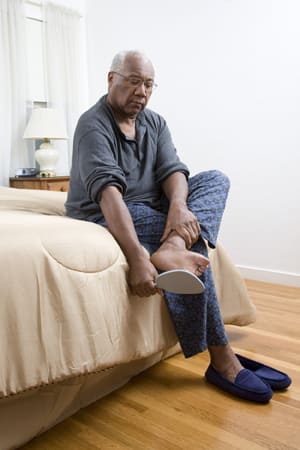
To prevent foot problems, carefully look at both of your feet every day. This includes looking between the toes and at the bottom of your feet. Use a long-handled mirror to make it easier to see all of the areas. It's important to control your blood sugar levels to help prevent foot problems.
Get medical care right away if you see any changes in your feet or if you're having problems controlling your blood sugar levels. Getting care can help your doctor find Charcot foot earlier and help prevent problems.
Fractures
Fractures begin to heal as Charcot foot progresses. But pressure from your body weight prevents bones from healing correctly. Continued walking can also cause new fractures. Your foot may still be red and swollen.
Chronic Charcot foot
Chronic Charcot foot is deformity caused by poor bone healing. Shoes may not fit the deformed foot. This can cause red, sore skin. This can lead to open sores (ulcers). Ulcers may become infected. Severe infection and poor wound healing may need amputation.
Online Medical Reviewer: Anne Fetterman RN BSN
Online Medical Reviewer: Marianne Fraser MSN RN
Online Medical Reviewer: Rita Sather RN
Date Last Reviewed: 03/01/2024
© 2000-2026 The StayWell Company, LLC. All rights reserved. This information is not intended as a substitute for professional medical care. Always follow your healthcare professional's instructions.
Need Help? We're Here for You
Our Member Services team is here to help you understand your benefits, find care, or resolve concerns.
1-800-510-9132
Call NC Quitline
Need support to quit smoking, vaping, or to quit other nicotine products? You can receive support including medicines free of charge:
1-800-784-8669
Schedule Transportation
Need transportation to a doctor's office, pharmacy, or other covered healthcare service? Contact us to arrange your ride.
1-800-510-9132
Provider Directory
Need to find a provider like a Primary Care Physician, Specialist, OB/GYN, or a Psychiatrist?
Provider DirectoryRelated Articles
The Kneecap (Patella) and Knee Joint
The kneecap provides leverage for your muscles as they bend and straighten the leg. It also protects the knee joint.
Anatomy of the Spine
Your backbone, also called the vertebral column, is made up of 33 vertebrae separated by spongy disks.
Gout Diet
Gout is a painful condition caused by an excess of uric acid. Some dietary changes may help you manage gout and prevent a gout attack. Read on to learn more.
The Kneecap (Patella) in Action
As the leg moves, the kneecap moves, too. It slides up and down its track on the thighbone. But if the kneecap slides “off track”—even a little—pain and damage can result.


