If you have osteoporosis, you can do a lot to reduce its effect on your life. Knowing how to prevent fractures and spinal curvature can help you live more comfortably and safely with this disease.
Reducing your risk for fractures
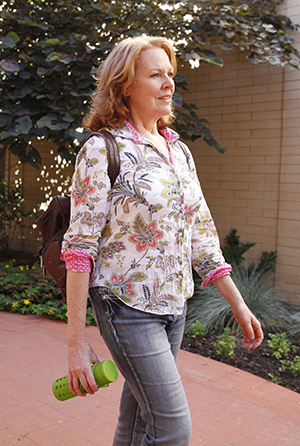
The most common fracture sites in people with osteoporosis are the wrist, spine, and hip. These fractures are often caused by accidents and falls. All fractures are painful and may limit what you can do. But hip fractures are very serious. They often need surgery, and it can take months to recover. To reduce your risk for fractures:
-
Get regular exercise. Try walking, swimming, or weight training.
-
Eat foods that are rich in calcium, or take calcium supplements.
-
Make your home safe to help avoid accidents.
-
Take extra precautions not to fall in risky areas, such as icy sidewalks.
Understanding spinal fractures
Your spine is made up of many bones called vertebrae. Osteoporosis can cause the vertebrae in your spine to collapse. As a result, your upper back may arch forward, creating a curvature. Spine fractures may also result from back strain and bad posture. You will also lose height. Your lower spine must then adjust to keep your body balanced. This can cause back pain. To prevent or lessen these spinal changes:
-
Practice good posture.
-
Use proper techniques if you need to lift heavy objects.
-
Do back exercises to help your posture.
-
Lie on your back when you have pain.
-
Ask your healthcare provider about these and other ways to help your spine.
Online Medical Reviewer: L Renee Watson MSN RN
Online Medical Reviewer: Raymond Turley Jr PA-C
Online Medical Reviewer: Thomas N Joseph MD
Date Last Reviewed: 03/01/2024
© 2000-2026 The StayWell Company, LLC. All rights reserved. This information is not intended as a substitute for professional medical care. Always follow your healthcare professional's instructions.
Need Help? We're Here for You
Our Member Services team is here to help you understand your benefits, find care, or resolve concerns.
1-800-510-9132
Call NC Quitline
Need support to quit smoking, vaping, or to quit other nicotine products? You can receive support including medicines free of charge:
1-800-784-8669
Schedule Transportation
Need transportation to a doctor's office, pharmacy, or other covered healthcare service? Contact us to arrange your ride.
1-800-510-9132
Provider Directory
Need to find a provider like a Primary Care Physician, Specialist, OB/GYN, or a Psychiatrist?
Provider DirectoryRelated Articles
All About Muscle Cramps
Muscle cramps -- involuntary muscle contractions -- are common. But even though they can be quite painful, they don't cause damage.
The Right Way to Push and Pull
Pushing and pulling objects can affect your back, as well as your arms and legs. Follow these tips to help protect your back.
Sitting Pretty: Protect Your Back
Sitting can cause back strain if the movement is not done right. Here are some tips to help protect your back as you sit.
Back Basics: A Healthy Spine
A healthy spine supports the body while letting it move freely. It does this with the help of 3 natural curves. Strong, flexible muscles help, too. They support the spine by keeping its curves correctly aligned. Read on to learn more.