Apply the skills you learned in the hospital or rehab center to your exercise program at home. Use a walker, cane, or crutches to help you move safely. By sticking with your exercise program, you'll walk more easily and return to an active life sooner. Contact your doctor or physical therapist if you have pain while exercising.
Maintaining your exercise program
Make exercise part of your daily routine. Lack of exercise can cause joint stiffness and decreased range of motion. But with continued exercise, you may even gain more strength and range of motion than you had before surgery. Keep meeting with your physical therapist as directed. They may add riding a stationary bike or other new exercises to your program.
Below is a list of exercises your physical therapist may suggest.
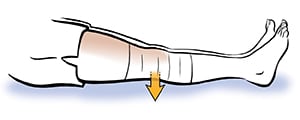
Quadriceps sets
Lying on your back, tighten your thigh muscles. Try to straighten your knee. Hold for
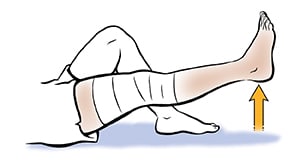
Straight leg raises
Tighten your thigh and straighten your knee as with the quadriceps set above. Lift your leg several inches (above your buttocks) off the bed and hold for
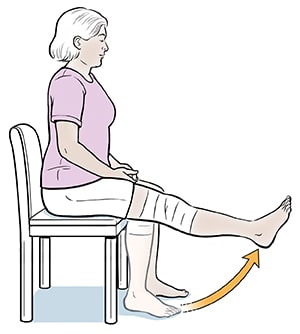
Sitting knee exercises
Start with
- Sit in a chair with both feet flat on the floor.
- Slowly straighten your operated or affected leg as much as you can. Hold for 5 seconds.
- Slowly bend your leg under the chair, bringing it back as far as you can. Hold for 10 to 20 seconds. Return your leg to the starting point.
Online Medical Reviewer: Daphne Pierce-Smith RN MSN
Online Medical Reviewer: Thomas N Joseph MD
Online Medical Reviewer: Trina Bellendir PT
Date Last Reviewed: 08/01/2023
© 2000-2026 The StayWell Company, LLC. All rights reserved. This information is not intended as a substitute for professional medical care. Always follow your healthcare professional's instructions.
Need Help? We're Here for You
Our Member Services team is here to help you understand your benefits, find care, or resolve concerns.
1-800-510-9132
Call NC Quitline
Need support to quit smoking, vaping, or to quit other nicotine products? You can receive support including medicines free of charge:
1-800-784-8669
Schedule Transportation
Need transportation to a doctor's office, pharmacy, or other covered healthcare service? Contact us to arrange your ride.
1-800-510-9132
Provider Directory
Need to find a provider like a Primary Care Physician, Specialist, OB/GYN, or a Psychiatrist?
Provider DirectoryRelated Articles
Using Crutches with Swing To (Non-Weight Bearing)
These images show the use of crutches with swing to.
Discharge Instructions: Caring for Plaster Cast (Child)
Your child will be going home from the hospital with a plaster cast in place. A cast helps your child’s body heal. A damaged cast can prevent the injury from healing well. Take good care of your child’s cast.
Fiberglass Cast Care
Read on for instructions to help you care for your fiberglass cast.
Discharge Instructions for Ankle Arthroscopy
Instructions to help take care of yourself after ankle arthroscopy.