During spinal fusion, your surgeon locks together, or fuses, certain bones in your spine that are causing pain. This limits the movement of these bones, which may help ease your pain. Even so, you may feel more flexible after a fusion because you can move with less pain.
Types of spinal fusion surgery
Which section of the spine is fused depends on where your pain is. Sections of the spine that may be fused include:
-
The neck (called cervical fusion)
-
The middle back (called thoracic fusion)
-
The low back (called lumbar fusion)
Fusion can be done from the front (anterior), side (lateral), or back (posterior) of the body. Your surgeon will suggest which method is best for you. Bone grafts used in the surgery may be from your bone, cadaver bone, or lab-made materials (biologics). Your surgeon will discuss these options with you. In general, studies are unclear if surgery is a better option than intensive rehabilitation programs. But surgery is often advised when the spinal nerves or spinal cord are severely compressed or the spine is severely misaligned. Your surgeon will discuss your specific case and options.
Before your surgery
You will most likely arrive at the hospital on the morning of the surgery. Be sure to follow all of your healthcare provider’s instructions on preparing for surgery.
-
Follow all directions you're given for not eating or drinking before surgery.
-
If you take a daily medicine, ask if you should still take it the morning of surgery.
-
If you're taking any blood-thinning medicines, tell your provider a few weeks in advance. This includes aspirin, herbal supplements, or anti-inflammatory medicines.
-
At the hospital, your temperature, pulse, breathing, and blood pressure will be checked. An IV (intravenous) line will be started to provide fluids and medicines needed during surgery.
Anesthesia
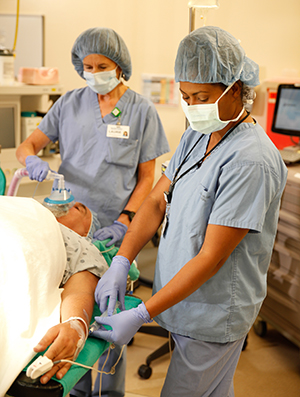
At the start of your surgery, you’ll be given general anesthesia. This medicine will put you into a deep sleep through the surgery. An anesthesiologist or nurse anesthetist (CRNA) is in charge of administering the anesthesia and monitoring your condition throughout the surgery. They'll meet with you before the surgery starts to talk to you and answer your questions.
After surgery
After the surgery, you’ll go to the postanesthesia care unit (PACU). You’ll stay there and be closely watched by nurses until you're fully awake and stable. This usually takes a few hours. Then you’ll go to your room. With cervical fusion, you may go home the next day if there's no complication and you can walk on your own. With lumbar fusion, you may stay in the hospital for
When to call your healthcare provider
Call your provider right away if you have any of these symptoms during your recovery:
-
More pain, redness, or drainage from the incision
-
Numbness, tingling, weakness, loss of bowel or bladder control
-
Fever over
100.4 °F (38 °C) or higher, or as advised by your provider -
Signs of a blood clot, which can include swelling, redness, and pain in the calf
-
Chest pain or shortness of breath
Online Medical Reviewer: Anne Fetterman RN BSN
Online Medical Reviewer: Heather M Trevino BSN RNC
Online Medical Reviewer: Joseph Campellone MD
Date Last Reviewed: 04/01/2024
© 2000-2026 The StayWell Company, LLC. All rights reserved. This information is not intended as a substitute for professional medical care. Always follow your healthcare professional's instructions.
Need Help? We're Here for You
Our Member and Recipient Services Team is here to help you understand your benefits, find care, or resolve concerns.
800-510-9132
Call NC Quitline
Need support to quit smoking, vaping, or to quit other nicotine products? You can receive support including medicines free of charge:
800-784-8669
Schedule Transportation
Need transportation to a doctor's office, pharmacy, or other covered healthcare service? Contact us to arrange your ride.
800-510-9132
Provider Directory
Need to find a provider like a Primary Care Physician, Specialist, OB/GYN, or a Psychiatrist?
Provider DirectoryRelated Articles
Your Amputation Surgery
Amputation is surgery to remove a limb. Learn about the surgery and what to expect after.
Foot Surgery: Bunions
A bunion is a bony bump. When the distance between the first and second metatarsal bones of the foot is greater than normal, the big toe may turn toward the other toes. A mild bunion may then form causing foot pain and swelling. Bunions are most often found near the joint at the base of the big toe. Bunions tend to run in families. They may cause pain, swelling, and skin irritation.
Knee Arthroscopy for a Ligament Tear
Knee arthroscopy is used to diagnose and treat a ligament tear using an arthroscope.
Achilles Tendon Repair Surgery
Achilles tendon repair surgery is a type of surgery to fix a damaged Achilles tendon. Learn more about the surgery, including why you might need it, what the risks are, how to get ready for it, and what happens during and after the surgery.