Bones can break (fracture) as a result of a fall, hit, or other injury. Most fractures aren't life-threatening. But they may be very painful. They may lead to serious problems if not treated correctly. Getting the right treatment is key for a healthy recovery.
When to go to the emergency room (ER)
Any fracture to the leg or arm should be considered a medical emergency. Don't move the arm or leg until help arrives. Don't try to straighten or adjust the bone. This can damage the bone. It can injure nearby blood vessels and nerves. If there is an open wound, cover it with a clean cloth. This is to keep it from getting dirty. It can help prevent infection.
What to expect in the ER
Here's what will happen in the ER:
-
A healthcare provider will ask about your injury and examine you carefully.
-
Any wounds you have will be cleaned.
-
X-rays of the injured area will be taken.
Treatment
Treatment depends on where the bone is broken and if there's an open wound. If you have an open wound, you may have IV (intravenous) antibiotics. The wound may be flushed with sterile water. Most fractures are treated in 2 stages:
-
Reduction. The bone is put back into its correct position, if needed.
-
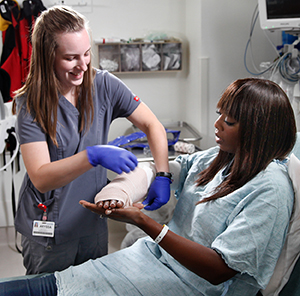
Immobilization. The bone is held in place so it doesn't move as it heals. For many arm or leg fractures, this is done with a splint or cast. Serious or compound fractures may need surgery. In that case, you'll be admitted to the hospital or referred to a bone specialist (orthopedic surgeon).
Signs of a leg or arm fracture
Here's what to look for:
-
The leg or arm is crooked
-
A joint looks out of place
-
A bone sticks out (protrudes) from the skin
-
Weight can't be put on the leg or arm
-
The limb swells or is very painful
-
The limb is numb or tingles
-
A popping or snapping was heard during the injury
-
Bruising
Online Medical Reviewer: Raymond Turley Jr PA-C
Online Medical Reviewer: Stacey Wojcik MBA BSN RN
Online Medical Reviewer: Thomas N Joseph MD
Date Last Reviewed: 04/01/2024
© 2000-2026 The StayWell Company, LLC. All rights reserved. This information is not intended as a substitute for professional medical care. Always follow your healthcare professional's instructions.
Need Help? We're Here for You
Our Member and Recipient Services Team is here to help you understand your benefits, find care, or resolve concerns.
800-510-9132
Call NC Quitline
Need support to quit smoking, vaping, or to quit other nicotine products? You can receive support including medicines free of charge:
800-784-8669
Schedule Transportation
Need transportation to a doctor's office, pharmacy, or other covered healthcare service? Contact us to arrange your ride.
800-510-9132
Provider Directory
Need to find a provider like a Primary Care Physician, Specialist, OB/GYN, or a Psychiatrist?
Provider DirectoryRelated Articles
Biceps Tendon Rupture
A biceps tendon connects the biceps muscle to the bones at the shoulder and elbow. This tendon can fray from heavy use over time and it can completely rupture or tear from injury, such as from lifting a heavy object.
Joint Dislocation
You have a joint dislocation. This happens when a strong force is applied to the joint, tearing ligaments and forcing the bones out of place. Often no bones are broken. But the nearby nerves and blood vessels can be damaged.
Understanding Dupuytren Contracture
Dupuytren contracture is a disease that can lead to limited use of your hand. While it often doesn't cause pain, it can make it hard to straighten your fingers. Learn about causes, symptoms, and treatment.
Muscle Spasm
A muscle spasm is a sudden tightening of the muscle you can’t control.


