External bleeding occurs when the body’s protective skin is broken. In severe cases, blood loss may place the person’s life in danger. Direct pressure usually stops bleeding, even the rush of blood from an artery.
When to call 911
Call
Apply direct pressure
-
Put on gloves or use other protection to prevent contact with the person’s blood.
-
Press directly on the wound with a clean gauze patch or cloth.
-
Keep the pressure constant for at least 5 minutes. This allows the blood to thicken (clot), preventing more bleeding.
-
Don't lift the bandage to check on the bleeding until at least 5 minutes have passed.

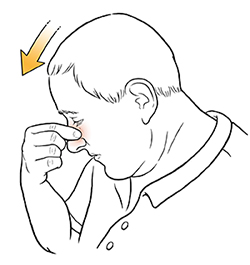
Pinch off nosebleeds
Reassure the person with the nosebleed and tell them to do the following:
-
Pinch their nostrils below the bone.
-
Tip their head slightly forward and sit quietly. Maintain pressure on the nose for at least 5 minutes.
-
Don't tilt their head backward. Tilting back may cause blood to run backward into their mouth and throat.
-
Don't destroy the clot by blowing or rubbing the nose after the bleeding stops.
Bleeding: How much is too much?
The person’s age, body size, and overall health all help determine when bleeding becomes serious. Concentrate on the person’s condition and appearance—not on the amount of blood lost. Bleeding from head wounds and nose bleeds can be dramatic while still being safe. Watch the person for signs of shock. If any shock symptoms appear, blood loss is a threat to life.
Symptoms of shock include:
-
Pale, clammy skin.
-
A racing pulse.
-
Confusion or unconsciousness.
-
Pulsing, spurting bleeding that can't be stopped with direct pressure.
Online Medical Reviewer: Eric Perez MD
Online Medical Reviewer: Tara Novick BSN MSN
Online Medical Reviewer: Tennille Dozier RN BSN RDMS
Date Last Reviewed: 06/01/2025
© 2000-2026 The StayWell Company, LLC. All rights reserved. This information is not intended as a substitute for professional medical care. Always follow your healthcare professional's instructions.
Need Help? We're Here for You
Our Member and Recipient Services Team is here to help you understand your benefits, find care, or resolve concerns.
800-510-9132
Call NC Quitline
Need support to quit smoking, vaping, or to quit other nicotine products? You can receive support including medicines free of charge:
800-784-8669
Schedule Transportation
Need transportation to a doctor's office, pharmacy, or other covered healthcare service? Contact us to arrange your ride.
800-510-9132
Provider Directory
Need to find a provider like a Primary Care Physician, Specialist, OB/GYN, or a Psychiatrist?
Provider DirectoryRelated Articles
Understanding Rabies
Rabies is a virus that infects the nerves and the brain. It's spread from the saliva of an infected animal. Rabies can be treated. Learn more about its symptoms, treatment, and how to prevent it.
Portuguese Man-of-War Sting
The Portuguese man-of-war is a jellyfish-like marine animal found in tropical oceans and bays. Its tentacles have coiled stingers with a very powerful and painful venom. Read on to learn how to care for yourself after being stung.
First Aid: Cold Exposure
Intense cold can cause frostbite and hypothermia. Learn about first aid for cold exposure.
Insect, Spider, and Scorpion Bites and Stings
Most insect bites are harmless and cause only minor swelling or itching. But if you're allergic to insects, such as wasps or bees, a sting can cause a life-threatening allergic reaction. The venom (poison) from scorpions and certain spiders can also be deadly, although this is rare. Knowing when to get emergency care could save your life.