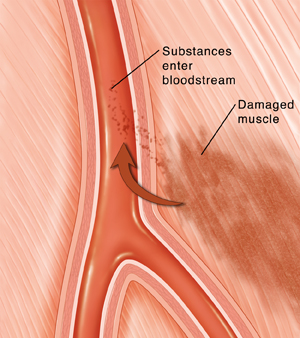
Rhabdomyolysis is a condition that occurs when a large amount of muscle is damaged. When muscle fibers break down, they release substances into the bloodstream. One of these is a protein called myoglobin. Myoglobin can damage the kidneys. Other substances released by damaged muscles can cause chemical and fluid imbalance in the body. Because of the damage and imbalances, the kidneys and the heart may stop working correctly. This can be dangerous, even fatal. Rhabdomyolysis is a medical emergency. Treatment is nearly always done in the hospital.
What causes rhabdomyolysis?
Causes include:
-
Trauma (such as a car accident), especially crush injuries
-
Extended overexertion of the muscles (such as during marathon running)
-
Blockage of an artery or vein that leads to muscle death (such as deep vein thrombosis)
-
High-voltage electric shock (such as from lightning or power lines)
-
Seizures
-
Abuse of alcohol
-
Use of certain illegal drugs
-
Certain prescription medicines, such as statins for high cholesterol
-
Infection
-
Heat stroke
-
Metabolic imbalances
-
Polymyositis, an inflammatory condition of the muscles
-
Severe burns
-
Certain genetic disorders
-
Prolonged immobilization
-
Certain toxins and poisons
Warning signs of rhabdomyolysis
Rhabdomyolysis is a medical emergency. If you have any of the following symptoms with the possibility of rhabdomyolysis, call
-
Dark brown or pink-red urine
-
Unusually stiff, achy, or tender muscles
-
Unusual muscle weakness
Other symptoms include fever, malaise, nausea, vomiting, cramping, belly (abdominal) pain, fast heart rate, and bruising.
As the condition gets worse, other symptoms may occur. If you have any of these symptoms, call
-
Swelling of the hands and feet
-
Trouble breathing
-
Abnormal heartbeat
-
Unexplained bleeding
Rhabdomyolysis treatment
Treatment is nearly always done in the hospital. An IV (intravenous) line is put into a vein in your arm or hand. IV fluids are then given to flush myoglobin and other harmful substances from the blood. Medicines may also be given to protect the kidneys. Other medicines are given to treat fluid and chemical imbalances and to help prevent complications. You may also be given pain medicine to control discomfort. If your kidneys are not working correctly, you may be hooked up to a machine that filters your blood and removes toxins (dialysis).
The hospital stay for rhabdomyolysis may be several days or longer. During this time, you’re checked to be sure no further problems develop. Your kidneys are checked for long-term damage. And the underlying cause of the condition is determined and treated if needed.
Follow-up care
With early treatment, the kidneys often recover without long-term damage. In some cases, though, permanent kidney damage may have been done. If this is the case, your healthcare provider will talk to you about any further treatment that is needed. And you and your provider can discuss treating any underlying medical cause of the condition.
Online Medical Reviewer: Eric Perez MD
Online Medical Reviewer: Ronald Karlin MD
Online Medical Reviewer: Tara Novick BSN MSN
Date Last Reviewed: 12/01/2022
© 2000-2026 The StayWell Company, LLC. All rights reserved. This information is not intended as a substitute for professional medical care. Always follow your healthcare professional's instructions.
Need Help? We're Here for You
Our Member and Recipient Services Team is here to help you understand your benefits, find care, or resolve concerns.
800-510-9132
Call NC Quitline
Need support to quit smoking, vaping, or to quit other nicotine products? You can receive support including medicines free of charge:
800-784-8669
Schedule Transportation
Need transportation to a doctor's office, pharmacy, or other covered healthcare service? Contact us to arrange your ride.
800-510-9132
Provider Directory
Need to find a provider like a Primary Care Physician, Specialist, OB/GYN, or a Psychiatrist?
Provider DirectoryRelated Articles
Cold Injury First Aid
Learn how to care for yourself as you recover from frostbite or frostnip.
Animal Bite (General)
An animal bite can cause a wound deep enough to break the skin. In addition to wound care, a tetanus shot may be given, if needed. Read on to learn more.
Emergency Information Form
In an emergency, it's easy to forget even the most well-known information. That's why it is vital for you to complete the information in this form for each person in your household.
When to Use the Emergency Room (ER)
An emergency means you could die if you don't get care quickly. Or you could be hurt permanently. Read below to know when to use, and when not to use, an emergency room.