In many cases, people who come to the emergency room with chest pain don’t have a problem with their heart. Instead, the pain is caused by other conditions. The health care team needs to be sure that you don't have a life-threatening cause for chest pain, such as:
-
A heart attack.
-
A blood clot in the lungs.
-
A collapsed lung.
-
A ruptured esophagus.
-
Tearing of the aorta.
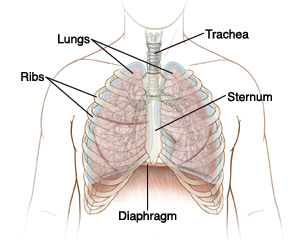
After these major causes have been ruled out, you may be checked for other causes of chest pain. These may be problems with the lungs, muscles, bones, digestive tract, nerves, or mental health. They include:
-
Inflammation around the lungs (pleurisy).
-
Collapsed lung (pneumothorax).
-
Lung inflammation (pleuritis or pneumonitis).
-
Fluid around the lung (pleural effusion).
-
Lung cancer (rare cause of chest pain).
-
Inflamed cartilage between the ribs (costochondritis).
-
Fibromyalgia.
-
Rheumatoid arthritis.
-
Chest wall strain.
-
Reflux.
-
Stomach ulcer.
-
Spasms of the esophagus.
-
Gallstones.
-
Gallbladder inflammation.
-
Panic or anxiety attacks.
-
Emotional distress.
After you've been checked, if your chest pain doesn’t appear to be caused by a heart problem, keep watching for the warning signs listed below.
Home care
Follow these guidelines when caring for yourself at home:
-
Rest today, and don't do any strenuous activity.
-
Take any prescribed medicine as directed.
Follow-up care
Follow up with your health care provider as advised.
Call 911
Call
-
A change in the type of pain, such as it feels different, becomes more severe, lasts longer, or begins to spread into your shoulder, arm, neck, jaw, or back.
-
Shortness of breath or increased pain with breathing.
-
Weakness, dizziness, or fainting.
-
A rapid heartbeat.
-
A crushing feeling in your chest.
When to get medical advice
Call your health care provider or get medical care right away if you have:
-
A cough with dark colored sputum (phlegm) or blood.
-
A fever of 100.4ºF (38ºC) or higher, or as directed by your provider.
-
Swelling, pain or redness in one leg.
Online Medical Reviewer: Heather M Trevino BSN RNC
Online Medical Reviewer: Rajadurai Samnishanth Researcher
Online Medical Reviewer: Rita Sather RN
Date Last Reviewed: 01/01/2025
© 2000-2026 The StayWell Company, LLC. All rights reserved. This information is not intended as a substitute for professional medical care. Always follow your healthcare professional's instructions.
Need Help? We're Here for You
Our Member and Recipient Services Team is here to help you understand your benefits, find care, or resolve concerns.
800-510-9132
Call NC Quitline
Need support to quit smoking, vaping, or to quit other nicotine products? You can receive support including medicines free of charge:
800-784-8669
Schedule Transportation
Need transportation to a doctor's office, pharmacy, or other covered healthcare service? Contact us to arrange your ride.
800-510-9132
Provider Directory
Need to find a provider like a Primary Care Physician, Specialist, OB/GYN, or a Psychiatrist?
Provider DirectoryRelated Articles
Broken or Bruised Nose, No X-Ray
A contusion (bruise) in the nose can cause pain, swelling, and stuffiness, as well as bleeding from the nose. A minor fracture can occur at the same time.
Blunt Abdominal Injury (Benign)
Signs of an internal injury may take time to appear after a blow to the belly (abdomen). This is true even if the condition does not seem serious at first. Watch out for new symptoms.
Collarbone Fracture
You have a break (fracture) in your collarbone (clavicle). This will cause swelling, pain, and bruising. The first 3 to 4 weeks will be the most painful. Learn how to recover at home.
Scalp Bruise
A bruise contusion can cause swelling, pain, and changes in skin color. Read on to learn how to care for a bruise.


