Bedwetting isn’t something your child does on purpose. Never punish or tease a child for wetting the bed. This could make the problem worse. It could make your child feel ashamed and embarrassed. Instead, be positive and supportive. Praise your child for success. And even for trying hard to stay dry.
Tips that may help
-
Get your child involved. Encourage your child to take responsibility for changing a wet bed during the night.
-
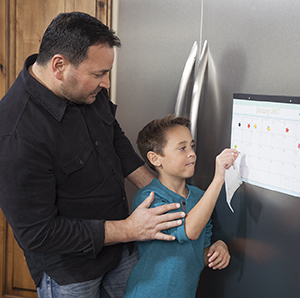
Put up a calendar or chart. Give your child a star or sticker for nights that they don't wet the bed.
-
Put night lights in the bedroom, hallway, and bathroom. These may help your child feel safer walking to the bathroom.
-
Keep a plastic bag or laundry basket in the room. This can hold wet sheets and pajamas.
-
Protect the mattress with a waterproof cover. Put an absorbent pad on the bed. Or keep extra sheets or dry towels in the room. If your child wets during the night, they can get up. They can remove the pad and change the sheets. Or put a dry towel over the wet spot.
-
Make overnight trips as easy as possible. If your child goes to a sleepover party, hide a disposable diaper in the bottom of the sleeping bag. This can be slipped on under their pajamas. Also ask the child's healthcare provider about medicines that may help control bedwetting for a night or 2 for children 6 years or older.
-
Waking your child up to use the bathroom may prevent a wet bed that night. But it won’t make your child outgrow the problem any faster.
Growing up
Children mature at different rates. Some kids don’t walk, talk, or grow as quickly as others. And some take longer to stop wetting the bed. This doesn’t mean something’s wrong. Be patient and understanding. This will help your child overcome bedwetting, without hurting their confidence or self-esteem. If your child suddenly begins bedwetting after being completely toilet trained for 6 months or longer, contact your healthcare provider. There may be a medical problem that needs treatment.
Featured in
Online Medical Reviewer: Marc Greenstein MD
Online Medical Reviewer: Melinda Murray Ratini DO
Online Medical Reviewer: Rita Sather RN
Date Last Reviewed: 02/01/2025
© 2000-2026 The StayWell Company, LLC. All rights reserved. This information is not intended as a substitute for professional medical care. Always follow your healthcare professional's instructions.
Need Help? We're Here for You
Our Member and Recipient Services Team is here to help you understand your benefits, find care, or resolve concerns.
800-510-9132
Call NC Quitline
Need support to quit smoking, vaping, or to quit other nicotine products? You can receive support including medicines free of charge:
800-784-8669
Schedule Transportation
Need transportation to a doctor's office, pharmacy, or other covered healthcare service? Contact us to arrange your ride.
800-510-9132
Provider Directory
Need to find a provider like a Primary Care Physician, Specialist, OB/GYN, or a Psychiatrist?
Provider DirectoryRelated Articles
When and Where to Get Care for Your Child
For parents of a newborn, first-time parents, or any anxious mom or dad, it may be hard to tell a true health threat that needs a healthcare provider's attention from a frightening, yet simple, illness that doesn't need medical treatment. Most sniffles, sneezes, and stomachaches don't need medical attention. But how do you know when it's time to call the healthcare provider?
When Your Child Needs an MRI Scan
Most MRI tests take 30 to 60 minutes. Depending on the type of MRI your child is having, the test may take longer. Give yourself extra time to check your child in.
School-Based Occupational Therapy
School-based occupational therapy is a type of help given to children at school to help them be more successful.
Well-Child Checkup: 11 to 13 Years
Between ages 11 and 13, your child will grow and change a lot. It's important to keep having yearly checkups so the doctor can track this progress. This sheet explains some of what you can expect.