Your doctor has prescribed a high-fiber diet for you. Fiber is what gives strength and structure to plants. Most grains, beans, vegetables, and fruits contain fiber. Foods rich in fiber are often low in calories and fat, but they fill you up more. These foods may also reduce the risk of certain health problems.
There are two types of fiber:
- Insoluble fiber. This is found in whole grains, cereals, and certain fruits and vegetables (such as apple skins, corn, and beans). Insoluble fiber is made up mainly of plant cell walls. It may prevent constipation and reduce the risk of certain types of cancer.
- Soluble fiber. This type of fiber is found in oats, beans, nuts, and certain fruits and vegetables (such as strawberries and peas). Soluble fiber turns to gel in the digestive system, slowing the movement of the digestive tract. It helps control blood sugar levels and can reduce cholesterol, which may help lower the risk of heart disease. Soluble fiber can also help control appetite.
Home care
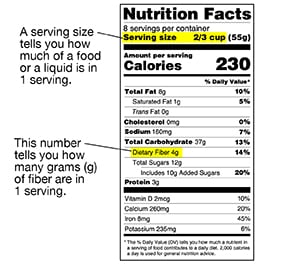
- Know how much fiber you need. The female recommended daily amount of fiber is 25 grams. The male recommended daily amount of fiber is 38 grams. After age 50, female daily fiber needs drop to 21 grams and male daily fiber needs drop to 30 grams.
- Start by slowly adding high fiber foods into your diet over the course of a week or two if you haven't been eating a lot of fiber. This will help your body adjust. It will help prevent digestive problems that can occur if you add too much fiber to your diet all at once.
- Drink plenty of fluids as you increase the fiber in your diet. This will help prevent constipation.
- Ask your doctor about a fiber supplement. Always take fiber supplements with a large glass of water.
- Keep track of how much fiber you eat.
- Eat a variety of foods high in fiber.
- Learn to read and understand food labels.
- Ask your doctor how much water you should be drinking.
- Look for these high-fiber foods:
- Whole-grain breads and cereals
- 6 ounces a day give you about 18 grams of fiber (1 ounce is equal to 1 slice of bread, 1 cup of dry cereal, or 1/2 cup of cooked rice).
- Include wheat and oat bran cereals, whole-wheat muffins or toast, quinoa, and corn tortillas in your meals.
- Fruits
- 2 cups a day give you about 8 grams of fiber.
- Apples, avocados, blackberries, raspberries, oranges, strawberries, pears, and bananas are good sources.
- Fruit juice does not contain as much fiber as the fruit it was made from.
- Vegetables
- 2½ cups a day give you about 11 grams of fiber. Add asparagus, carrots, broccoli, peas, and corn to your meals.
- Legumes
- 1/4 cup a day (in place of meat) gives you about 4 grams of fiber. Try navy beans, lentils, chickpeas, and soybeans.
- Seeds
- A small handful of seeds gives you about 3 grams of fiber. Try sunflower, flax, pumpkin, and chia seeds.
- Whole-grain breads and cereals
Follow-up
Make a follow-up appointment, or as advised. Ask your doctor if seeing a registered dietitian may help you plan a high-fiber diet.
Online Medical Reviewer: Brittany Poulson MDA RDN CD CDE
Online Medical Reviewer: Diane Horowitz MD
Online Medical Reviewer: Heather M Trevino BSN RNC
Date Last Reviewed: 09/01/2025
© 2000-2026 The StayWell Company, LLC. All rights reserved. This information is not intended as a substitute for professional medical care. Always follow your healthcare professional's instructions.
Need Help? We're Here for You
Our Member Services team is here to help you understand your benefits, find care, or resolve concerns.
1-800-510-9132
Call NC Quitline
Need support to quit smoking, vaping, or to quit other nicotine products? You can receive support including medicines free of charge:
1-800-784-8669
Schedule Transportation
Need transportation to a doctor's office, pharmacy, or other covered healthcare service? Contact us to arrange your ride.
1-800-510-9132
Provider Directory
Need to find a provider like a Primary Care Physician, Specialist, OB/GYN, or a Psychiatrist?
Provider DirectoryRelated Articles
Understanding Food and Cholesterol
Learn about foods that can raise your cholesterol and foods that can help you lower it.
Calcium Supplements
Calcium is a mineral that helps us make strong bones and teeth. Most of the calcium in our bodies is in our bones. We spend almost half of our lives (30 to 35 years) building to a peak bone mass. Taking in enough calcium helps younger people build strong bones. Maintaining a safe calcium level helps older people limit bone loss.
Using Spices and Herbs for Flavorful Meals
Spices and herbs add two important ingredients to your meals: taste and aroma.
Daily Food Plan Worksheet: 2,800 Calories
Your calorie needs are about 2,800 calories a day. These are the USDA guidelines for your daily recommended amount of each food group.


