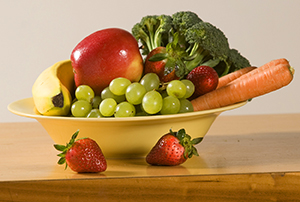
Fresh fruits and vegetables are great quick food choices. They need little or no preparation. And they are loaded with important nutrients.
|
True |
False |
|
|
☐ |
☐ |
1. Eating cabbage can help reduce your risk for some cancers. |
|
☐ |
☐ |
2. Dietary fiber, found in most fresh fruits and vegetables, is also found in animal products. |
|
☐ |
☐ |
3. The deeper the color of a vegetable, the more beta-carotene it has. |
|
☐ |
☐ |
4. A chili pepper has more vitamin C than an orange. |
|
☐ |
☐ |
5. You can enjoy a sweet dessert for under 100 calories. |
|
☐ |
☐ |
6. Fresh fruits and vegetables are made up mostly of water. |
|
☐ |
☐ |
7. Fresh fruits and vegetables have almost no sodium. |
|
☐ |
☐ |
8. Vegetables don't have calcium. |
|
☐ |
☐ |
9. The amount of water used to cook vegetables won’t affect their nutritional content. |
Answers
-
TRUE. Nutrition experts recommend eating cabbage and other cruciferous vegetables such as broccoli, cauliflower, and kale. They can reduce your risk for some types of cancer.
-
FALSE. Dietary fiber is not found in animal products. Whole grains, fruits, and vegetables are all good sources of dietary fiber.
-
TRUE. Foods with more beta-carotene are a deeper shade of yellow, orange, or green. Beta-carotene is an important nutrient for good health.
-
TRUE. One fresh chili pepper has almost 40% more vitamin C than an orange.
-
TRUE. Fresh fruit is a great dessert that is naturally sweet and low in calories. A cup of mixed fresh fruit can have between 65 and 100 calories.
-
TRUE. An average apple is 85% water plus vitamins, minerals, and carbohydrates.
-
TRUE. Almost all fresh fruits and vegetables are low in sodium.
-
FALSE. Good sources of calcium include broccoli, bok choy, and dark leafy greens (kale, mustard, and turnip greens).
-
FALSE. When cooking vegetables, use as little water as possible. This will help you from losing nutrients.
Online Medical Reviewer: Diane Horowitz MD
Online Medical Reviewer: Kenny Turley PA-C
Online Medical Reviewer: Louise Cunningham RN BSN
Date Last Reviewed: 08/01/2022
© 2000-2026 The StayWell Company, LLC. All rights reserved. This information is not intended as a substitute for professional medical care. Always follow your healthcare professional's instructions.
Need Help? We're Here for You
Our Member Services team is here to help you understand your benefits, find care, or resolve concerns.
1-800-510-9132
Call NC Quitline
Need support to quit smoking, vaping, or to quit other nicotine products? You can receive support including medicines free of charge:
1-800-784-8669
Schedule Transportation
Need transportation to a doctor's office, pharmacy, or other covered healthcare service? Contact us to arrange your ride.
1-800-510-9132
Provider Directory
Need to find a provider like a Primary Care Physician, Specialist, OB/GYN, or a Psychiatrist?
Provider DirectoryRelated Articles
Understanding Food and Cholesterol
Learn about foods that can raise your cholesterol and foods that can help you lower it.
Calcium Supplements
Calcium is a mineral that helps us make strong bones and teeth. Most of the calcium in our bodies is in our bones. We spend almost half of our lives (30 to 35 years) building to a peak bone mass. Taking in enough calcium helps younger people build strong bones. Maintaining a safe calcium level helps older people limit bone loss.
Using Spices and Herbs for Flavorful Meals
Spices and herbs add two important ingredients to your meals: taste and aroma.
Daily Food Plan Worksheet: 1,800 Calories
Your calorie needs are about 1,800 calories a day. These are the USDA guidelines for your daily recommended amount of each food group.