An armpit (axillary) temperature is taken by holding the thermometer under your baby's arm. To give a correct reading, this must be done with care. Armpit temperatures are a good screening for a child of any age. But they're not the most accurate way to take your child's temperature. Use the steps on this handout as a guide.
Getting the thermometer ready
-
Be sure to use a thermometer that's for armpit use.
-
Clean the thermometer before and after each use.
-
Make sure the thermometer is at room temperature.
-
Remove the cover from the thermometer.
Positioning your baby
-
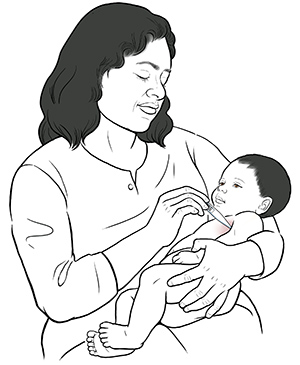
Hold your baby on your lap. Or lay your infant on their back on a firm surface.
-
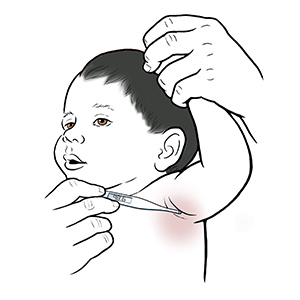
Grasp your baby's elbow. Gently but firmly lift the arm away from baby's side.
-
Place the tip of the thermometer in the fold of the armpit. To get a true reading, make sure the thermometer is against your baby's skin on all sides.
-
Bring the arm down next to the baby's side.
Taking the temperature
Follow the instructions for using your digital thermometer.
-
Keep your baby's arm against their side. This keeps the thermometer in place.
-
When the thermometer beeps, release your hold and gently lift your baby's arm. Remove the thermometer.
-
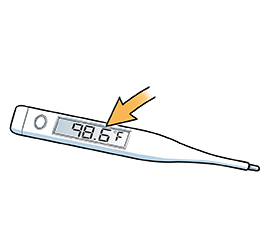
Read the temperature on the digital display. Normal temperature is around 98.6°F (37°C). But it can range from 97.6°F to 99.6°F (36.4°C to 37.6°C). Armpit temperatures can range from 0.5°F to 1°F (0.3°C to 0.6°C) lower than a rectal temperature.
-
Before putting the thermometer away, clean it with soap and warm water or alcohol.
-
When reporting the temperature to your baby's doctor, tell them that it was an axillary temperature reading.
Online Medical Reviewer: Amy Finke RN BSN
Online Medical Reviewer: Heather M Trevino BSN RNC
Online Medical Reviewer: Liora C Adler MD
Date Last Reviewed: 06/01/2025
© 2000-2026 The StayWell Company, LLC. All rights reserved. This information is not intended as a substitute for professional medical care. Always follow your healthcare professional's instructions.
Need Help? We're Here for You
Our Member Services team is here to help you understand your benefits, find care, or resolve concerns.
1-800-510-9132
Call NC Quitline
Need support to quit smoking, vaping, or to quit other nicotine products? You can receive support including medicines free of charge:
1-800-784-8669
Schedule Transportation
Need transportation to a doctor's office, pharmacy, or other covered healthcare service? Contact us to arrange your ride.
1-800-510-9132
Provider Directory
Need to find a provider like a Primary Care Physician, Specialist, OB/GYN, or a Psychiatrist?
Provider DirectoryRelated Articles
Promoting Good Sleep for Your Child
In children, it's not always easy to address sleep problems, and sleep disorders often go undiagnosed. How can you know when sleep is a problem for your child? This sheet explains general guidelines for how much sleep children need. It also describes signs of a problem with sleep and tips for improving it.
Healthy Sleep Habits in Children
Read on for helpful tips to create healthy sleep habits for your child.
Stages of Play
Children go through distinct stages of play as they grow. Each stage is critically important to the development of the next.
Kid Care: Checkups
How often should your child see a healthcare provider? Not just when they are sick! Your child also needs wellness checkups. Read on to learn more.