Your health care provider may advise a bland diet if you have an upset stomach. It consists of foods that are mild and easy to digest. It's better to eat small, frequent meals rather than 3 large meals a day.
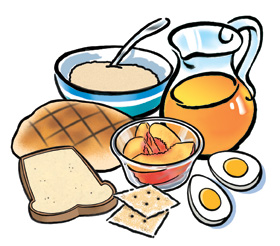
Beverages
Okay: Fruit juices, noncaffeinated teas and coffee, noncarbonated waters
Avoid: Carbonated beverage, caffeinated tea and coffee, all alcoholic beverages
Bread
Okay: Refined white, wheat, or rye bread, graham or soda crackers, Melba toast, plain rolls, bagels
Avoid: Whole-grain bread
Cereal
Okay: Refined cereals: cooked or ready-to-eat
Avoid: Whole-grain cereals and granola, or those containing bran, seeds, or nuts
Desserts
Okay: Peanut butter and all others except those to "avoid"
Avoid: Chocolate, cocoa, coconut, popcorn, nuts, seeds, jam, marmalade
Fruits
Okay: Canned, cooked, frozen, or fresh fruits without seeds or tough skin
Avoid: Olives, skin and seeds of fruit, dried fruit
Meats
Okay: All fresh or preserved meat, fish, and fowl
Avoid: High-fat meats or processed meats, such as bacon, hot dogs, and sausages, any meats that are prepared with those spices to "avoid," or those prepared by deep frying or other high-fat cooking methods
Cheese, dairy, and eggs
Okay: Eggs, cottage cheese, cream cheese, other cheeses, lactose-free milk
Avoid: All cheeses made with those spices to "avoid"; may need to avoid milk and yogurt if sensitive to lactose
Potatoes and pasta
Okay: Potato, rice, macaroni, noodles, spaghetti
Avoid: None
Soups
Okay: All soups without heavy seasoning
Avoid: Soups made with those spices to "avoid," or those with coarse, fibrous vegetables
Vegetables
Okay: Canned, cooked, fresh, or frozen mildly flavored vegetables without seeds, skins, or coarse fiber
Avoid: Vegetables prepared with those spices to "avoid"; skin and seeds of vegetables and those with coarse fiber; broccoli, cabbage, cauliflower, cucumber, green peppers, and corn
Spices
Okay: Salt, lemon and lime juice, vinegar, all extracts, sage, cinnamon, thyme, mace, allspice, paprika
Avoid: Chili powder, cloves, pepper, seed spices, garlic, gravy pickles, highly seasoned salad dressings
Other
Avoid: Sugar alcohols and artificial sweeteners, greasy or fatty foods, foods high in added sugars
Online Medical Reviewer: Bianca Garilli MD
Online Medical Reviewer: Brittany Poulson MDA RDN CD CDE
Online Medical Reviewer: Marianne Fraser MSN RN
Date Last Reviewed: 12/01/2024
© 2000-2026 The StayWell Company, LLC. All rights reserved. This information is not intended as a substitute for professional medical care. Always follow your healthcare professional's instructions.
Need Help? We're Here for You
Our Member Services team is here to help you understand your benefits, find care, or resolve concerns.
1-800-510-9132
Call NC Quitline
Need support to quit smoking, vaping, or to quit other nicotine products? You can receive support including medicines free of charge:
1-800-784-8669
Schedule Transportation
Need transportation to a doctor's office, pharmacy, or other covered healthcare service? Contact us to arrange your ride.
1-800-510-9132
Provider Directory
Need to find a provider like a Primary Care Physician, Specialist, OB/GYN, or a Psychiatrist?
Provider DirectoryRelated Articles
Soft Diet
Your healthcare provider has prescribed a soft diet. This means eating foods that are soft, low in fiber, and easy to digest. Here are some general guidelines to get you started.
Diet for Vomiting or Diarrhea (Adult)
Here's what to eat and drink for the first few days after you've had vomiting or diarrhea.
Bland Diet
If you have an upset stomach, your health care provider may recommend a bland diet. Here's a list of foods to eat, and foods to avoid.
Feeding Tube Replacement
Your feeding tube has been replaced. Unless advised otherwise, you may resume your usual feeding schedule. Feeding tubes are usually replaced every 6 to 12 months.