You've chosen a hearing aid. Make sure you understand the features of the aid you’re buying. This includes the trial period, the warranty, and the return policy. You'll then start the process of having it fitted. The hearing aid will be custom-made for you. A special graph of your hearing loss (audiogram) will be used as a guide.
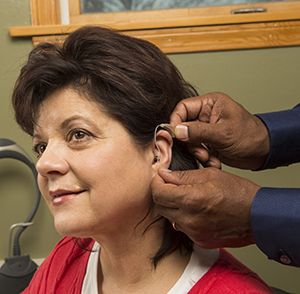
Making a mold of your ear
The hearing aid must be fitted to the shape of your ear. A bad fit can cause sound feedback. It can also cause irritation in the ear canal. A mold of your ear canal may be made. This is painless. The audiologist or hearing aid specialist will put a soft material into your ear. It firms up in a few minutes and is easily removed. This creates a mold of your ear. The mold is then sent to the company that will make your hearing aid.
Checking the fit
When your hearing aid is ready, the fit will be checked. To get ready for the fitting, make a list of questions you have about your hearing aid. Having your questions in writing will help you remember them. The audiologist or hearing aid specialist will make sure it feels comfortable in your ear. The aid will be checked to make sure it works correctly. Tests will be done to check your ability to hear sounds while wearing the aid. After the hearing aid is fine-tuned, you can start wearing it. Ask for instructions about how to care for it. It's important to keep hearing aid batteries out of reach of children and pets. They can be deadly if swallowed.
Online Medical Reviewer: Chris Southard RN
Online Medical Reviewer: Marianne Fraser MSN RN
Online Medical Reviewer: Ronald Karlin MD
Date Last Reviewed: 03/01/2024
© 2000-2026 The StayWell Company, LLC. All rights reserved. This information is not intended as a substitute for professional medical care. Always follow your healthcare professional's instructions.
Need Help? We're Here for You
Our Member Services team is here to help you understand your benefits, find care, or resolve concerns.
1-800-510-9132
Call NC Quitline
Need support to quit smoking, vaping, or to quit other nicotine products? You can receive support including medicines free of charge:
1-800-784-8669
Schedule Transportation
Need transportation to a doctor's office, pharmacy, or other covered healthcare service? Contact us to arrange your ride.
1-800-510-9132
Provider Directory
Need to find a provider like a Primary Care Physician, Specialist, OB/GYN, or a Psychiatrist?
Provider DirectoryRelated Articles
Endoscopic Sinus Surgery
Endoscopic sinus surgery can be done to help clear sinus blockages. Read on to learn more.
Mastoidectomy
Mastoidectomy can remove infected bone and growths from the middle ear. But it may not always improve your hearing in the affected ear. Read on to learn more.
Nasal Surgery: Septoplasty
You're scheduled to have a type of nasal surgery called septoplasty. Read on to learn about what to expect during and after this surgery.
Ossicular Chain Reconstruction: 1 or 2 Bones
This surgery can improve conductive hearing. It can be done to replace a damaged malleus or incus bone.


