Each day, you and your baby are changing and growing together. Here’s a quick look at what’s happening to both of you.
How you are changing
Even when you don’t notice it, your body is adapting to meet the needs of your growing baby. The changes in your body might also affect your moods.
Your body
Your uterus expands as your baby grows. As the weeks go by, you will feel more pressure on your bladder, stomach, and other organs. You may notice some skin color changes on your forehead, nose, or cheeks. Freckles may darken, and moles may grow. You may notice a darker line on your abdomen between your belly button and pubic bone in the midline.
Your moods
The second trimester is often easier than the first. Still, be prepared for mood swings. These are from the increase in hormones made by your body. Hormones are chemicals that affect the way organs work. These mood swings are a normal part of pregnancy.
How your baby is growing
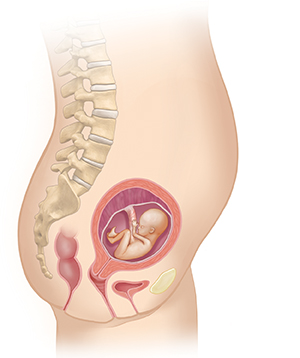
Month 4
Your baby’s heartbeat may be heard with a Doppler (handheld ultrasound device) by 9 to 10 weeks. Eyebrows, eyelashes, and fingernails begin to form.
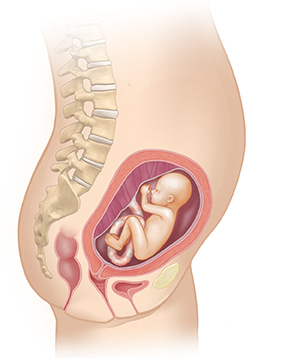
Month 5
You may feel your baby move. After a growth spurt, your baby nears 10 inches.
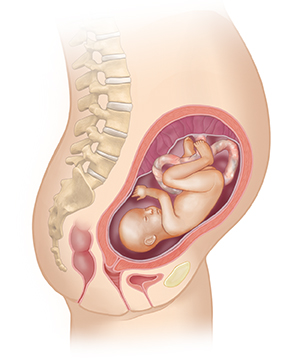
Month 6
Your baby’s fingerprints have formed. Your baby weighs about 1 to 2 pounds (0.45 to 0.91 kg) and is about 12 inches long.
Featured in
Online Medical Reviewer: Daniel N Sacks MD
Online Medical Reviewer: Donna Freeborn PhD CNM FNP
Online Medical Reviewer: Heather Trevino
Date Last Reviewed: 03/01/2024
© 2000-2026 The StayWell Company, LLC. All rights reserved. This information is not intended as a substitute for professional medical care. Always follow your healthcare professional's instructions.
Need Help? We're Here for You
Our Member and Recipient Services Team is here to help you understand your benefits, find care, or resolve concerns.
800-510-9132
Call NC Quitline
Need support to quit smoking, vaping, or to quit other nicotine products? You can receive support including medicines free of charge:
800-784-8669
Schedule Transportation
Need transportation to a doctor's office, pharmacy, or other covered healthcare service? Contact us to arrange your ride.
800-510-9132
Provider Directory
Need to find a provider like a Primary Care Physician, Specialist, OB/GYN, or a Psychiatrist?
Provider DirectoryRelated Articles
First Trimester Fatigue
For many people, the extreme tiredness of the first trimester is quite a surprise. And it's an especially hard transition for those who are normally go-getters with lots of energy. Learn more about what causes this fatigue--and what to do to feel better.
PUPPP (Pruritic Urticarial Papules and Plaques of Pregnancy)
PUPPP is a very common skin rash that can occur later in pregnancy. It goes away after the baby is born. Learn about how you can ease the itching it causes.
Anemia During Pregnancy
Anemia during pregnancy is often caused by not having enough iron in the blood. It is common in pregnancy and very easy to treat.
Dizziness or Fainting During Pregnancy
Feeling dizzy or faint is very common during pregnancy. It generally does not mean something is wrong. It is most common during the first trimester, but it can happen anytime during pregnancy. Dizziness and fainting (syncope) are often caused by a drop in blood pressure. This is from the hormones released during pregnancy that relax the body's blood vessels. Too little blood is then pumped up to the brain. When this happens, you lose consciousness (faint). Fainting is not dangerous to you or your baby unless you fall and hurt yourself.


