Most people have low back pain now and then. In many cases, it isn’t serious, and self-care can help. Sometimes low back pain can be a sign of a bigger problem. Call your healthcare provider if your pain returns often or gets worse over time. There are plenty of ways to take care of your back. Get regular exercise, lose any excess weight, and practice good posture.
Take a short rest
Lying down during the day may be helpful for short periods of time if pain worsens with sitting or standing. It may help to have a pillow under the knees when lying on your back. But, keep in mind, long-term bed rest could be damaging.
Reduce pain and swelling
Cold reduces swelling. Both cold and heat can reduce pain. Remember to protect your skin by placing a towel between your body and the ice or heat source.
-
For the first few days, apply an ice pack for
15 to 20 minutes, several times a day. To make a cold pack, put ice cubes in a plastic bag that seals at the top. A wrapped frozen bag of vegetables can also work as a cold pack. -
After the first few days, try heat for 15 minutes at a time to ease pain. Always make sure the heating pad is wrapped. Never sleep on a heating pad.
-
Over-the-counter medicine can help control pain and swelling. Try aspirin or a nonsteroidal anti-inflammatory drugs (NSAIDs) such as ibuprofen.
Exercise
Exercise can help your back heal. It also helps your back get stronger and more flexible, preventing any reinjury. Ask your healthcare provider about specific exercises for your back.
Use good posture to avoid reinjury
-
When moving, bend at the hips and knees. Don’t bend at the waist or twist around.
-
When lifting, keep the object close to your body. Lift heavy items using your legs, not your back. Don’t try to lift more than you can handle.
-
When sitting, keep your lower back supported. Use a rolled-up towel as needed. Make sure your work area or desk is at the correct height.
-
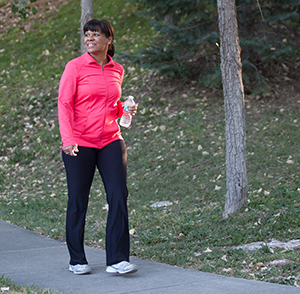
Use a mirror to check your posture when you walk. Stand straight with shoulders back. Ask your healthcare providers for exercises that will improve your posture.
When to seek medical care
Seek medical care right away if:
-
You can't stand or walk
-
You have a temperature over
100.4 °F (38.0 °C), or as advised by your healthcare provider -
You have frequent, painful, or bloody urination
-
You have severe abdominal pain
-
You have a sharp, stabbing pain
-
Your pain is constant
-
You have pain, tingling, or numbness in your leg
-
You have weakness in one or both legs or problems with bladder, bowel, or sexual function. These symptoms should be seen by a healthcare provider right away. This is because they can be caused by compression of the nerve bundle at the base of the spine.
-
You feel pain in a new area of your back
-
You notice that the pain isn’t decreasing after more than a week
-
Your symptoms worsen or new symptoms develop
Online Medical Reviewer: Anne Fetterman RN BSN
Online Medical Reviewer: Marianne Fraser MSN RN
Online Medical Reviewer: Rita Sather RN
© 2000-2026 The StayWell Company, LLC. All rights reserved. This information is not intended as a substitute for professional medical care. Always follow your healthcare professional's instructions.
Need Help? We're Here for You
Our Member Services team is here to help you understand your benefits, find care, or resolve concerns.
1-800-510-9132
Call NC Quitline
Need support to quit smoking, vaping, or to quit other nicotine products? You can receive support including medicines free of charge:
1-800-784-8669
Schedule Transportation
Need transportation to a doctor's office, pharmacy, or other covered healthcare service? Contact us to arrange your ride.
1-800-510-9132
Provider Directory
Need to find a provider like a Primary Care Physician, Specialist, OB/GYN, or a Psychiatrist?
Provider DirectoryRelated Articles
Sling and Swathe
Sling and swathe is used to support your arm and hold it closely against your body after an injury.
Ankle Inversion (Strength)
Follow the step-by-step instructions for this exercise.
After Back Surgery: Tips for Daily Living
These tips can help make some tasks easier and will help protect your back after surgery.
Boost Your Back Flexibility With the Cat-Cow
Try the cat-cow exercise to strengthen your belly muscles and improve spinal flexibility.