Cercarial dermatitis is a type of skin rash. The rash is also known as swimmer’s itch. It’s caused by an allergic reaction to tiny parasites. These parasites are released from infected snails into fresh and salt water (such as lakes, ponds, and oceans). It can appear minutes to days after you swim in water with the parasites. It usually happens during the summer months. It isn't spread from person to person.
How to say it
sir-KAYR-ee-uhl der-muh-TY-tis
What causes cercarial dermatitis?
The condition is caused by tiny parasites that attach and go into the skin and cause an allergic reaction.
They can't live or reproduce in your skin. But they can cause an uncomfortable allergic reaction.
Swimmer’s itch isn't the same as seabather’s eruption, which is caused by tiny jellyfish larvae. Seabather’s eruption occurs on skin covered by swim clothing that traps jellyfish larvae. Cercarial dermatitis occurs on bare skin not covered by clothing.
Because the cercarial dermatitis rash is an allergic reaction, your body may react more strongly each time you are exposed to the parasites. You may have symptoms quicker, and they may be worse.
Symptoms of cercarial dermatitis
The skin symptoms include:
-
Burning.
-
Itching.
-
Red bumps that may look like pimples, hives, or blisters.
Treatment for cercarial dermatitis
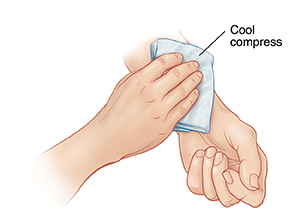
The rash will gradually go away in a few weeks to a month. Make sure to prevent infection by not scratching it. You can treat itching with any of these:
-
Cool, moist compress. Put a clean, damp cloth on the area for 20 to 30 minutes, 5 or 6 times a day, as needed.
-
Mild corticosteroid cream or ointment. You can apply this medicine several times a day on clean skin.
-
Antihistamine. This medicine can help ease itching. You can put it on your skin as a cream or take it by mouth as a pill. Be aware that some antihistamines may make you drowsy.
-
Colloidal oatmeal bath. Soaking in water with colloidal oatmeal can help soothe itchy skin.
-
Baking soda paste. This can help relieve itching. Mix baking soda with water into a paste. Put it on your rash.
-
Other anti-itch lotion or cream. Ask your health care provider about other anti-itch lotion or cream that can help relieve itching. They may prescribe a stronger medicine if over-the-counter medicine isn’t helping you.
The best way to prevent getting the rash is to stay out of lakes or bodies of water known to be infested.
Possible complications of cercarial dermatitis
Scratching can cause a bacterial skin infection. An infection may need treatment with antibiotic medicine. This can be put on the skin as a cream or ointment or taken by mouth as a pill.
When to seek medical care
Contact your health care provider right away if you have:
-
A fever of 100.4°F (38°C) or higher, or as advised by your provider.
-
Symptoms that don’t get better or that get worse.
-
New symptoms.
Author: Wheeler, Brooke
Online Medical Reviewer: Daphne Pierce-Smith RN MSN
Online Medical Reviewer: Lalitha Kadali
Online Medical Reviewer: Rita Sather RN
Date Last Reviewed: 03/01/2025
© 2000-2026 The StayWell Company, LLC. All rights reserved. This information is not intended as a substitute for professional medical care. Always follow your healthcare professional's instructions.
Need Help? We're Here for You
Our Member and Recipient Services Team is here to help you understand your benefits, find care, or resolve concerns.
800-510-9132
Call NC Quitline
Need support to quit smoking, vaping, or to quit other nicotine products? You can receive support including medicines free of charge:
800-784-8669
Schedule Transportation
Need transportation to a doctor's office, pharmacy, or other covered healthcare service? Contact us to arrange your ride.
800-510-9132
Provider Directory
Need to find a provider like a Primary Care Physician, Specialist, OB/GYN, or a Psychiatrist?
Provider DirectoryRelated Articles
Periorbital Cellulitis
Periorbital cellulitis is an infection of the tissues around the eye. It's most often caused by an infected scratch or insect bite. Sometimes it's caused by a sinus infection. Learn how to care for this condition at home, and when you should call your healthcare provider.
Psoriasis
Psoriasis is an inflammatory condition that affects the skin and nails. Learn how to care for this condition at home.
Understanding a Lipoma
A lipoma is a lump under the skin that's made of fat. It's not cancer (benign). Learn more about how lipomas occur, symptoms, treatment choices, and possible complications.
Abrasions
Abrasions are skin scrapes. Their treatment depends on how large and deep the abrasion is. Read on to learn about general care when you are home and when to call the health care provider.