What is an ingrown toenail?
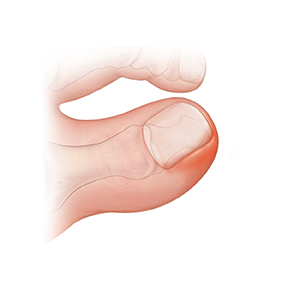
Ingrown nails grow under the skin. They may cause pain at the tip of the toe or all the way to the base of the toe. The pain is often worse when you are walking. An ingrown nail may also lead to infection, inflammation, or a more serious condition. If it’s infected, you might see fluid (pus) or redness.
How is an ingrown toenail diagnosed?
Your health care provider will examine your toe and may press the painful area. You may have blood tests, cultures, or X-rays if the provider thinks there may be other problems.
Treatment for ingrown toenails
If the nail isn’t infected, your health care provider may trim the corner of it to help relieve your symptoms. They may need to remove one side of your nail back to the cuticle. The base of the nail may then be treated with a chemical to keep the ingrown part from growing back.
Severe infections or ingrown nails may need antibiotics. They may need temporary or permanent removal of part or all of the nail. To prevent pain, a local anesthetic may be used in these procedures. This treatment may be done at your provider's office or at a hospital. Your provider will give you instructions on how to clean and treat the area.
Preventing ingrown toenails
You can prevent many nail problems by wearing the right shoes and trimming your nails properly. To help prevent infection, keep your feet clean and dry. If you have diabetes, talk with your health care provider before doing any foot self-care.
-
The right shoes. Get your feet measured. Your shoe size may change as you age. Wear shoes that are supportive and roomy enough for your toes to wiggle. Look for shoes made of natural materials such as leather. Natural materials let air get to your feet.
-
Correct trimming. To prevent problems, trim your toenails straight across. Don't cut down into the corners. If you can’t trim your own nails, ask your health care provider to do it for you.
Online Medical Reviewer: Raymond Turley Jr PA-C
Online Medical Reviewer: Stacey Wojcik MBA BSN RN
Online Medical Reviewer: Thomas N Joseph MD
Date Last Reviewed: 03/01/2025
© 2000-2026 The StayWell Company, LLC. All rights reserved. This information is not intended as a substitute for professional medical care. Always follow your healthcare professional's instructions.
Need Help? We're Here for You
Our Member and Recipient Services Team is here to help you understand your benefits, find care, or resolve concerns.
800-510-9132
Call NC Quitline
Need support to quit smoking, vaping, or to quit other nicotine products? You can receive support including medicines free of charge:
800-784-8669
Schedule Transportation
Need transportation to a doctor's office, pharmacy, or other covered healthcare service? Contact us to arrange your ride.
800-510-9132
Provider Directory
Need to find a provider like a Primary Care Physician, Specialist, OB/GYN, or a Psychiatrist?
Provider DirectoryRelated Articles
Understanding Epidermoid Cyst
An epidermoid cyst is a small abnormal growth in the top layers of the skin. These cysts grow slowly, and they can grow anywhere on the body. Learn about causes, symptoms, and treatment.
Understanding Tinea Unguium
Tinea unguium is a type of fungal infection. The fungus infects the fingernails and, more commonly, the toenails. It's more common in men, older adults, and people who have diabetes or peripheral vascular disease.
Facial Bruise (Contusion)
A facial contusion can cause swelling, pain, and changes in skin color.
Ringworm of the Scalp
Ringworm is caused by a fungus, not a worm. It's passed from animals or people infected with the fungus. Here's what you need to know about caring for yourself at home.


