Night terror is when a child partly wakes up from sleep and screams, kicks, panics, sleepwalks, thrashes, or mumbles. Night terror usually affect children from age 4 to 12. Even though a night terror can be scary for a parent to see, it’s important to know that it is not harmful to your child.
What is night terror?
Night terror is not the same as a nightmare. A nightmare is a dream that makes a child feel scared when they wake. A night terror is a set of physical behaviors that happen when a child is still partly asleep. Night terror usually happens 90 minutes to 3 hours after a child falls asleep.
During a night terror episode, your child may suddenly sit up in bed with eyes wide open and scream or cry out. They may breathe quickly, gasp, moan, mumble, or thrash about in a confused state. This can last for several minutes up to an hour.
A child will often:
-
Be frightened but can’t be woken up or comforted.
-
Have their eyes wide open but not know that you are there.
-
Think objects, shadows, or people in the room are scary.
There is often nothing you can do to calm your child. Eventually, your child falls back to a deep sleep. Your child will likely not remember the episode in the morning.
Coping with night terror
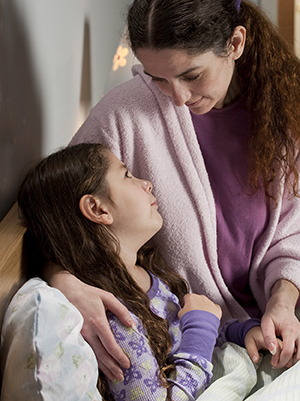
A night terror can be more upsetting to a parent than to a child. It’s important to know that night terror is not a sign of medical illness or mental problems. The cause of night terror is not known. But it may be more likely to occur after a day of overexertion and exhaustion. Night terror can recur. But most children outgrow this as they get older. No medical treatment is needed.
Here’s what to do during a night terror episode to help your child:
-
Stay close to your child until the episode passes.
-
Don’t try to wake up your child by shaking them or shouting.
-
Turn on the lights so that your child is less afraid of shadows.
-
Make soothing comments or gently hold your child if it seems to help.
-
Protect your child from injury. If your child leaves the bed, try to gently guide them back to bed.
-
Explain to caregivers what a night terror is and what to do and not do if it happens.
Helping prevent night terror episodes
You may be able to help prevent night terror with a few steps:
-
Be sure your child goes to bed at a regular time each night.
-
Don't let your child use a computer, TV, or smartphone 2 to 4 hours before bed.
-
Don't give your child food just before bed.
-
Limit caffeinated beverages, such as soda, for at least 5 hours before bed.
-
Keep the bedroom comfortable and cool.
-
Don't let your child do strenuous exercise too close to bedtime.
-
Talk to your child about their day. Discuss any events that seemed to cause anxiety.
-
Make sure bedtime is early enough to give them enough sleep time.
-
Have a younger child go back to a daily nap.
When to call your doctor
Contact your child’s health care provider if your child:
-
Has a fever, headache, or stiff neck.
-
Drools, jerks, or stiffens during an episode.
-
Has abnormal behavior, confusion, or fear during the day.
-
Has episodes that last longer than 30 minutes.
-
Has episodes often that are hard for you to manage.
Featured in
Online Medical Reviewer: Chelsey Schilling BSN RN
Online Medical Reviewer: Daphne Pierce-Smith RN MSN
Date Last Reviewed: 03/01/2025
© 2000-2026 The StayWell Company, LLC. All rights reserved. This information is not intended as a substitute for professional medical care. Always follow your healthcare professional's instructions.
Need Help? We're Here for You
Our Member Services team is here to help you understand your benefits, find care, or resolve concerns.
1-800-510-9132
Call NC Quitline
Need support to quit smoking, vaping, or to quit other nicotine products? You can receive support including medicines free of charge:
1-800-784-8669
Schedule Transportation
Need transportation to a doctor's office, pharmacy, or other covered healthcare service? Contact us to arrange your ride.
1-800-510-9132
Provider Directory
Need to find a provider like a Primary Care Physician, Specialist, OB/GYN, or a Psychiatrist?
Provider DirectoryRelated Articles
When You Suspect Your Child Is Using Alcohol or Drugs
Learn how to help make your child safe from drug and alcohol use, and what to do if you suspect your child is using.
Promoting Good Sleep for Your Child
In children, it's not always easy to address sleep problems, and sleep disorders often go undiagnosed. How can you know when sleep is a problem for your child? This sheet explains general guidelines for how much sleep children need. It also describes signs of a problem with sleep and tips for improving it.
Obstructive Sleep Apnea in Children
Obstructive sleep apnea is a condition that causes a child to briefly stop breathing while sleeping. It happens because of a blockage in the upper airway. The pause in breathing may occur many times in a night, disrupting the child’s sleep.
Keep Kids Safe During Yard Work
Power tools make yard work easier, from mowing the lawn to trimming the bushes. But these tools also pose a threat to children if precautions aren't taken. Read on for important safety steps.