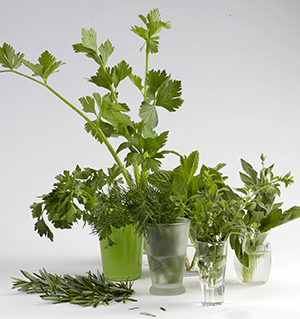
Herbs and spices add flavor to cooking without adding fat or sodium. That's why they're great for healthy cooking. Try these tips to help create tasty, healthy meals.
How much to use?
If a recipe calls for 1 tablespoon of fresh herbs, you can use one of these instead:
-
1 teaspoon of dried herbs
-
1/4 teaspoon of powdered herbs
Tips for getting the most of herbs and spices
-
Use kitchen shears or a sharp knife to cut leaves of fresh herbs. Cutting the leaves finely will release the most flavor.
-
When using whole spices, don't grind them until you need them. Crushing the berries and seeds with a mortar and pestle or grating whole nutmeg or cinnamon sticks just before adding them to your recipe will guarantee the most flavor.
-
Dried herbs pack more flavor for the same quantity than fresh herbs, and powdered herbs are more potent than dried flakes. If you are using powdered herbs in a recipe that calls for fresh, you'll want to decrease the amount you add.
-
When adding fresh or dried herbs and spices to cold recipes, such as dips or salad dressings, allow the food to sit in the refrigerator for at least a couple of hours before serving so the flavors can blend.
-
Add fresh herbs and spices to hot dishes as close to serving time as possible for the most flavorful results. Dried herbs and spices should be added early in the cooking process to prevent a powdery taste.
-
The longer dried herbs and spices sit in your cupboard without being used, the more flavor they lose. Whole spices last longer than ground or powdered spices. Store dried herbs and spices in a cool, dry, dark place. Keep powdered herbs and spices for no longer than a couple of years.
Featured in
Online Medical Reviewer: Brittany Poulson MDA RDN CD CDE
Online Medical Reviewer: Diane Horowitz MD
Online Medical Reviewer: Heather M Trevino BSN RNC
Date Last Reviewed: 05/01/2025
© 2000-2026 The StayWell Company, LLC. All rights reserved. This information is not intended as a substitute for professional medical care. Always follow your healthcare professional's instructions.
Need Help? We're Here for You
Our Member and Recipient Services Team is here to help you understand your benefits, find care, or resolve concerns.
800-510-9132
Call NC Quitline
Need support to quit smoking, vaping, or to quit other nicotine products? You can receive support including medicines free of charge:
800-784-8669
Schedule Transportation
Need transportation to a doctor's office, pharmacy, or other covered healthcare service? Contact us to arrange your ride.
800-510-9132
Provider Directory
Need to find a provider like a Primary Care Physician, Specialist, OB/GYN, or a Psychiatrist?
Provider DirectoryRelated Articles
Herb and Spice Quiz
Here are some questions to test your knowledge about herbs and spices.
Low-Fat Diet
A low-fat diet will help you lose weight. It also can lower cholesterol and prevent symptoms of gallbladder disease. Here's a list of foods to eat more of, as well as those to stay away from.
Simple Steps to Help You Eat Better
In a healthy choice contest, fresh fruit would win out over a slice of pie any day. But many of us find it hard to resist the dessert. Here are tips to help you eat nutritiously.
Healthy Tips for Eating Out
You don't have to give up eating out to cut down on fat, cholesterol, and salt. You just need to think about what you order. Many menus highlight low-fat and low-sodium dishes. But if you can't find what you want, ask.