Folliculitis is a common skin condition in which the hair follicles become infected or inflamed. Follicles are the tiny holes from which hair grows out of your skin. This skin condition can occur in any place on the body where hair grows. It's often found on the neck, face, scalp, arms, legs, buttocks, chest, and back.
How to say it
foh-lihk-yoo-LI-tihs
What causes folliculitis?
An infection or irritation can cause this skin condition. Infectious folliculitis is often caused by bacteria called Staph aureus. But it may also be caused by other bacteria, viruses, or fungus. It can also be caused by a wound or irritation of the skin. Shaving is a common cause. Some cases may come from taking certain medicines, wearing tight clothing, or skin rubbing against skin.
Symptoms of folliculitis
This skin condition tends to develop quickly. It looks like little pimples on a base of a red, inflamed hair follicles. These bumps may ooze pus. They may also be:
-
Itchy.
-
Painful.
-
Red.
-
Swollen.
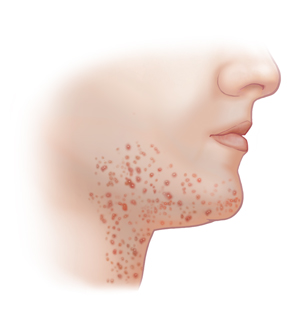
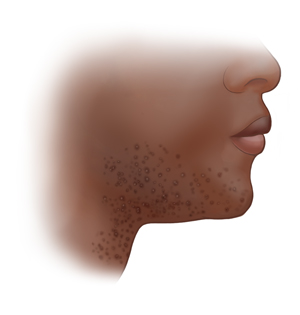
Treatment for folliculitis
Treatment depends on the cause of the inflammation. In some cases, this skin condition will go away on its own in a few days. But it may return. Treatment choices include:
-
A warm compress. Putting a warm, wet washcloth on the inflamed skin may help. Don't reuse the same washcloth, because that may spread infection.
-
Medicine. Many skin (topical) and oral medicines are available. Antibiotics are used for bacterial infections. Antifungal medicines are best for fungal infections. Antiviral medicines are used for viral folliculitis.
-
Good hygiene. Keeping the skin clean can help. Use a clean razor when you shave, and don't try to shave too closely. Prevent ingrown hairs after shaving. This can reduce folliculitis in the beard area. Stay away from any substances that bother your skin.
When to get medical advice
Contact your health care provider or get medical care right away if you have:
-
A fever of 100.4°F (38°C) or higher, or as directed by your provider.
-
Pain that gets worse.
-
Symptoms that don’t get better or that get worse.
-
New symptoms.
Author: Semko, Laura
Online Medical Reviewer: Daphne Pierce-Smith RN MSN
Online Medical Reviewer: Rita Sather RN
Online Medical Reviewer: Vinita Wadhawan Researcher
Date Last Reviewed: 04/01/2025
© 2000-2026 The StayWell Company, LLC. All rights reserved. This information is not intended as a substitute for professional medical care. Always follow your healthcare professional's instructions.
Need Help? We're Here for You
Our Member and Recipient Services Team is here to help you understand your benefits, find care, or resolve concerns.
800-510-9132
Call NC Quitline
Need support to quit smoking, vaping, or to quit other nicotine products? You can receive support including medicines free of charge:
800-784-8669
Schedule Transportation
Need transportation to a doctor's office, pharmacy, or other covered healthcare service? Contact us to arrange your ride.
800-510-9132
Provider Directory
Need to find a provider like a Primary Care Physician, Specialist, OB/GYN, or a Psychiatrist?
Provider DirectoryRelated Articles
Understanding Cercarial Dermatitis
Cercarial dermatitis is a type of skin rash. It's caused by an allergic reaction to tiny parasites. The parasites are sometimes found in water, such as lakes, rivers, and the ocean.
Chemical Burn of the Skin
Your skin has been burned by a chemical. Read on to learn how to care for your burn.
Athlete’s Foot
Athlete's foot is caused by a fungal infection in the skin. It affects the skin between the toes, causing fissures (cracks in the skin). It can also affect the bottom of the foot where it causes dry white scales and peeling of the skin. Learn about caring for this condition.
Understanding Plantar Warts
A plantar wart is a small noncancer growth on the bottom of the foot. Learn more about them, including causes, symptoms, and treatment.


